
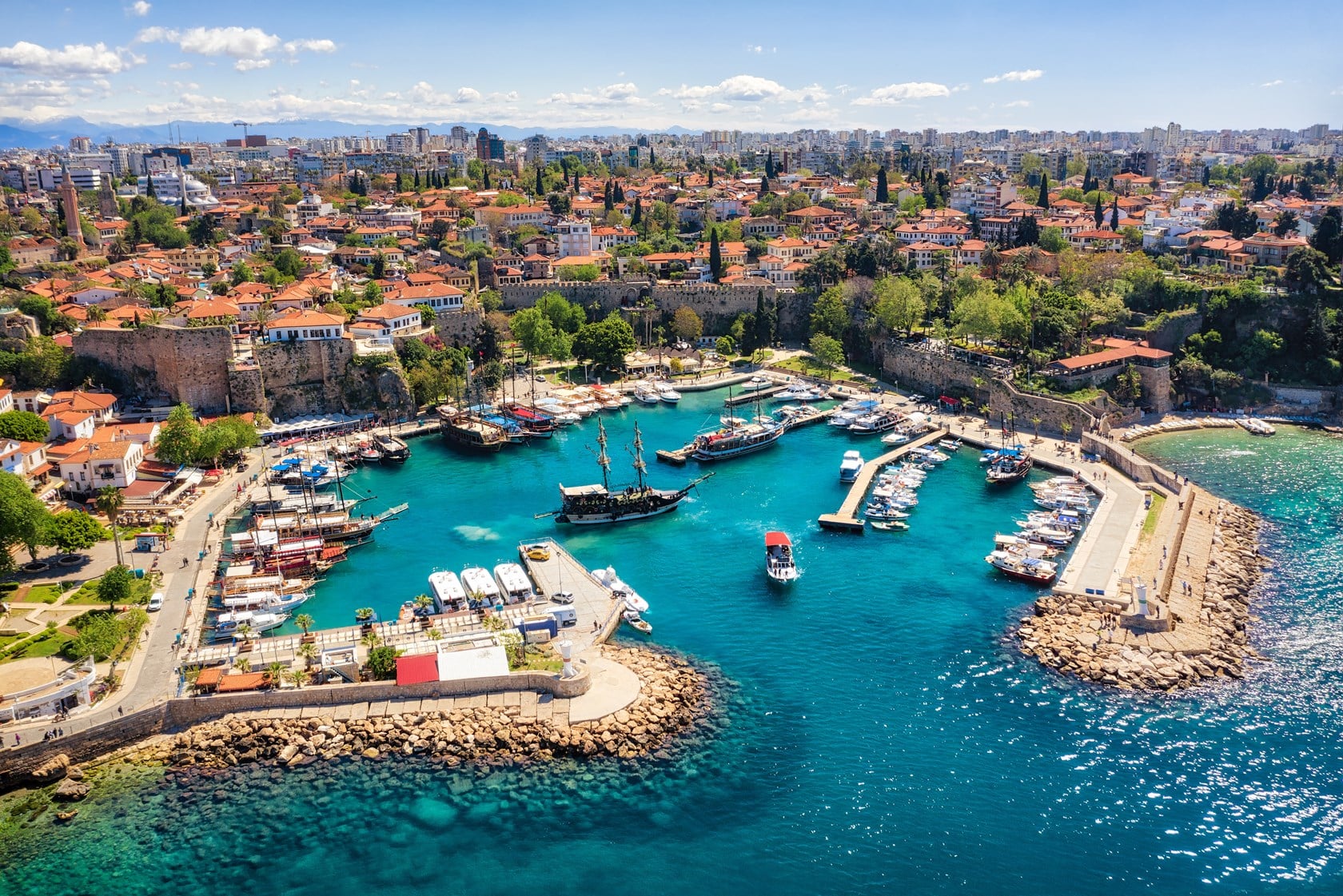
COP31 arrives at a difficult moment. We are approaching 2030 with the world off track on some of its most important climate and nature goals. The UN’s Overshoot Report makes clear the prospect of exceeding 1.5°C, with profound implications for economies and businesses. At the same time, geopolitical tensions, economic uncertainty, and pressure on public and private finances are making action harder, not easier.
We saw the same tension at the recent COP17 biodiversity summit. There was progress, but the Global Review conducted on the progress made on the targets set in the 2022 Kunming-Montreal Global Biodiversity Framework made clear that action remains insufficient to achieve the 2030 nature targets, with 22 of 23 goals behind schedule. The assessment should concern us beyond the nature agenda: setting ambition matters, but without the policy frameworks, investment, and conditions for implementation, we will continue to fall short.
So, asking what another COP can achieve, and why business leaders should attend, is important.
For me, the answer is increasingly about pace and scale. Businesses are where climate ambition meets the real economy, bringing investment, technology, and practical solutions. That perspective needs to be at the table. But business cannot act alone: clear, consistent, and coordinated policy, enabling infrastructure, and the right market conditions are essential to move those solutions from individual examples of progress to change across entire sectors and economies.
That is why I will be at COP31. With 2030 fast approaching, we urgently need to accelerate action in four areas: scaling industrial decarbonization, accelerating clean electrification, embedding adaptation within broader business resilience, and building the trust needed to deliver the transition. Solutions exist, and we know breakthrough is possible. The challenge now is to create the policy, investment, and delivery conditions to move from pockets of progress to action at the pace and scale the moment demands.
1. How can businesses scale industrial decarbonization?
We need to move much faster on the hardest to abate emissions. The next phase of decarbonization will increasingly be won or lost in sectors such as steel, cement, and chemicals, and in industrial heat and complex global value chains. Solutions are advancing, but they are often capital-intensive, take years to deploy, and depend on infrastructure, policy, and market conditions that no individual company can control.
That makes pace and scale a collective challenge. Companies still need to move faster, but policy certainty, enabling infrastructure, and collaboration across value chains will increasingly determine whether solutions such as clean heat, electrification, renewables, and carbon capture can reach commercial scale.
ERM is working to accelerate decarbonization through multiple initiatives. ERM, Secaro, and AstraZeneca’s Clean Heat Program is bringing companies together to tackle supply chain heat decarbonization, while ERM is also working with partners to unlock emissions reductions in the "critical middle" of food value chains. In Türkiye, the country's Zero Waste initiative could support the development of energy from waste, potentially coupled with carbon capture and storage solutions and shared CO₂ infrastructure for heavy industry. At COP31, ERM and the University of Oxford will explore this opportunity and the collaboration needed to scale it.
2. What will it take to accelerate electrification?
Electrification needs to accelerate, but electrification alone will not get us where we need to go. The COP31 Presidency’s proposed 35-by-35 Global Electrification pledge aims to increase electricity’s share of global final energy consumption from around 23 percent today to 35 percent by 2035. Encouragingly, electricity demand has risen more than twice as fast as overall energy demand since 2019, while electric vehicles accounted for nearly one in four new cars sold globally in 2025.
But achieving the target will require a much bigger shift in the energy system. Countries will need to reduce total energy demand while rapidly expanding clean power and the grids needed to deliver it. How this is reflected in negotiations will be important to watch in Antalya.
For business, the challenge is implementation. Annual grid investment stands at around $500 billion, roughly half the level required, while global renewable capacity remains less than one-third of what will be needed by 2035. Closing this gap will require modernizing and expanding grids, making end-use electrification more commercially attractive, and mobilizing concessional finance and guarantees for capital-intensive investments.
Through our work with organizations like WBCSD and initiatives like Electric Advantage, ERM is helping translate business experience into practical pathways and policy recommendations. COP31 needs to turn ambition on electrification into the infrastructure, investment, and policy conditions that allow business to act.
3. Why should businesses embed adaptation within holistic resilience?
Businesses need to build resilience as fast as the risks around them are changing. Companies are operating in an increasingly volatile environment: the challenge is no longer simply managing a growing list of risks but understanding how they connect and where disruption can cascade across the business. Sixty-three percent of respondents to the Allianz Risk Barometer 2026 identified business interruption as their leading climate-related concern.
That requires adaptation to move from the margins of climate strategy into core business decision-making. The ERM-convened Council on Sustainability Transformation’s recent paper Adaptation and Resilience: How business can thrive in a changing climate explores how businesses can embed adaptation into decision-making to protect performance, long- term value, and growth.
But adaptation to individual climate impacts is only part of building a resilient business. Holistic resilience takes an integrated view of how climate and other sustainability-related risks connect with supply chains, social factors, governance, financial and insurability pressures, and geopolitical risks. Looking at where these risks intersect helps leaders identify where disruption could compound and where investment will have the greatest impact. ERM's new briefing Resilience reframed: Why interconnected sustainability risks demand a more holistic approach explores this approach further, building on the results of our Holistic Resilience Pulse, a methodology that we created to assess corporate resilience maturity.
At COP31, our “Beyond adaptation: The path to holistic resilience” event will explore how businesses can put this thinking into practice.
4. How can businesses build the trust that a just and inclusive transition depends on?
The transition cannot move faster if communities do not support how it is delivered. The scale of new energy and technology infrastructure required will increase pressure on land, water, energy systems, workers, and communities. Businesses therefore need to understand local impacts early, involve affected stakeholders in decision-making, and make clearer how communities will share in the benefits created. Recent experience across the data center and power sectors demonstrates how quickly social acceptance can become a material development risk.
That makes the Just Transition Mechanism agreed at COP30 particularly relevant as governments consider how international cooperation, technical assistance, capacity building, and knowledge sharing can support implementation.
At COP31, ERM’s “The energy transition has a trust problem” roundtable will examine what it will take to deliver infrastructure at speed while addressing the interests of communities and wider society. Trust is not separate from delivery – increasingly, it is a condition for it.
What will COP31 mean for business?
The next phase of climate action will be judged by whether we can deliver it at sufficient pace and scale. That means tackling the hardest parts of industrial decarbonization, building the clean power and grids needed for electrification, investing in resilience before disruption forces the issue, and earning the trust needed to build the infrastructure on which the transition depends.
Business has a central role to play but cannot deliver the transition alone. Consistent climate policies are critical to unlock investment and action. Stronger mitigation today reduces the adaptation burden businesses will face tomorrow.
This is the opportunity for COP31. In Antalya, I look forward to working with our clients and partners to identify what is working, remove what is holding progress back, and accelerate practical solutions at the pace and scale the moment demands.