Power Play: Thinking beyond grid expansion
Why TSOs must move beyond grid expansion and embrace flexibility, storage, and smarter system design to deliver a cost-effective net-zero power system.

Transmission system operators (TSOs) must ensure that power suppliers and demand centers can connect to the transmission infrastructure at any time. However, the transition to a power system dominated by renewables makes matching supply and demand increasingly challenging (also see our article Power play). Many major sources of supply are either far away from demand centers (as with offshore wind) or highly distributed and located in rural areas (such as solar). At the same time, TSOs have limited power to help mitigate the mismatch between supply and demand.
The rapid growth in offshore wind is a good example of how this tension plays out. With more than 1,360 GW of offshore wind currently in development globally, countries around the world are betting on offshore wind energy to help decarbonize their electricity supply and industrial sectors – even as markets globally have faced significant setbacks, with policy uncertainty, permitting delays, and rising costs slowing offshore wind development.
Integrating this rapidly increasing share of renewables into the onshore energy system requires governments to consider new ways of balancing energy supply and demand, not only in terms of magnitude but also at specific times and locations. Already, current grids can’t accommodate the renewables projects knocking on the door to connect, and electricity demand is set to grow by 60 percent by the end of the decade.
However, despite their responsibility to ensure grid access, system operators at both transmission and distribution levels have little or no influence on the location and timing of new demand centers, such as data centers and electrolyzers. System operators are also largely dependent on energy market dynamics to provide sufficient flexibility to balance the system and address the temporal mismatch between supply and demand. Without a strong role in coordinating power supply and demand development, system operators have limited incentive to proactively invest in transmission infrastructure, which is required to ensure sufficient grid capacity in the long term.
Maintaining a reliable energy system requires a combination of system integration solutions. Some examples include:
The Action Plan for Grids, launched by the EU Commission in 2023, is a good example of such an integrated approach. The 14-point plan aims to modernize Europe’s electricity grid and prepare for the renewables-based electrification of the energy system. It is estimated that $797 billion USD of new investment will be required by 2030 to upgrade Europe’s grids.
Important recommendations in the plan include reinforcing long-term network planning and mandating the European Network of Transmission System Operators (ENTSO-E), the EU-wide association of electricity transmission system operators, to identify what is needed for onshore and offshore grids. Areas ENTSO-E will assess include storage, optimization, and hydrogen infrastructure, as well as ways to improve coordination among stakeholders, policymakers, and regulators at both the EU and the national level.
New guiding principles for anticipatory investments – and for cross-border cost sharing for offshore projects – will help system operators get a head start on investments, which is crucial given the long project lead times. At the recent North Sea Summit in Hamburg (January, 2026), leaders and energy ministers of the North Sea region committed to working closely to accelerate the development of stable, secure, and affordable offshore energy and hydrogen. This included commitments to jointly develop cross-border transmission infrastructure.
In practice, few countries and regions have an integrated approach dialed in. The fundamental problem: the current set-up of roles and responsibilities among policymakers, system operators, and market participants to make the power system work was never designed for the fundamental challenges of the unfolding energy transition. The old system struggles to do two things:
Overcoming these limitations requires recalibrating the roles and responsibilities of the different stakeholders, as well as a stronger coordinating role of governments, supported by a properly mandated expert TSO.
Non-price criteria in offshore wind tenders, as promoted by several countries and mandated by the EU Net Zero Industry Act, are an example of how governments can take on a stronger role. The Act requires EU member states to include non-price criteria and conditions in offshore wind tenders, including sustainability and resilience contribution, cybersecurity, responsible business conduct, and the ability to deliver projects fully and on time. These criteria must apply to at least 30 percent of the annual renewable auction volume, or alternatively to at least 6 gigawatts of capacity auctioned each year in a Member State.
Figure 1 provides an overview of countries worldwide that have adopted non-price criteria in their offshore wind tenders, requiring offshore project developers to provide onshore system integration solutions.
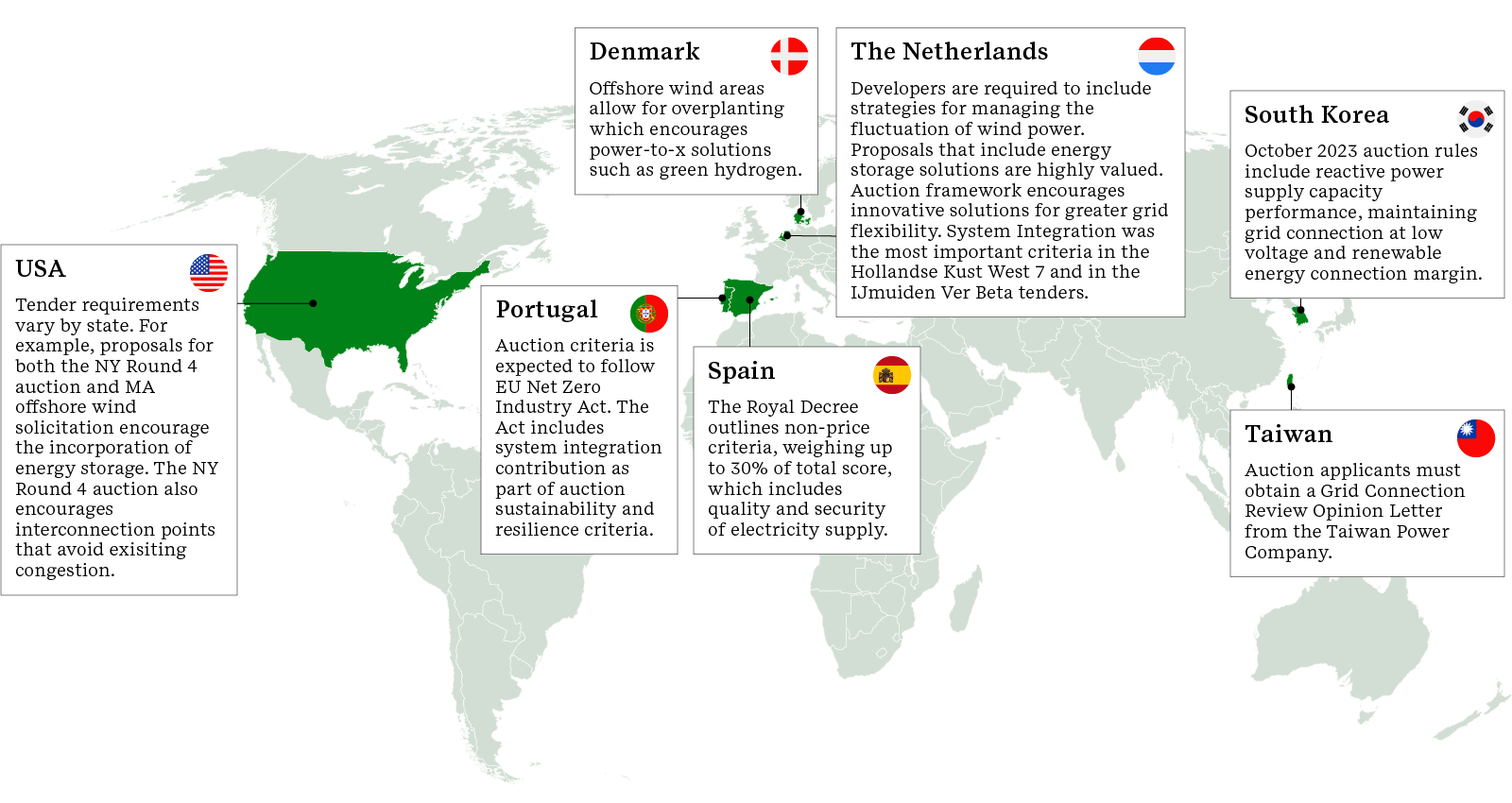
Figure 1: Map showing emerging systems integration criteria in offshore wind tenders. Source: ERM
As offshore wind auctions and tender designs evolve worldwide, governments, led by European countries, are increasingly incorporating non-price criteria to encourage system integration and broader energy system benefits. Examples of such system integration criteria include:
It is necessary to consistently scrutinize these criteria, which continue to evolve, to assess their validity and focus on the ones that deliver results. In some cases, the non-price criteria provide only half-hearted solutions to system integration challenges, as was the case with the tender design for an offshore wind park in the Netherlands (see box).
Example: System integration criteria in the IJmuiden Ver Beta offshore wind tender in the Netherlands (March 2024).
The offshore wind tender for the IJmuiden Ver Beta site in the Netherlands included non-price system integration criteria. Offshore wind developers were invited to find new electricity demand (up to 1GW for a maximum score) to alleviate grid congestion that would result from the 2GW additional energy supply that the project would deliver. This additional demand could be located anywhere in the country, except for the area southeast of the yellow line in Figure 2. While this criterion does stimulate the search for new electricity demand, the relatively minor locational restriction appears somewhat of a compromise, excluding only the region where the most significant congestion would result. For example, it would still allow for the construction of an electrolyzer in the north of the country. That outcome would still result in significant transmission challenges through the existing network.
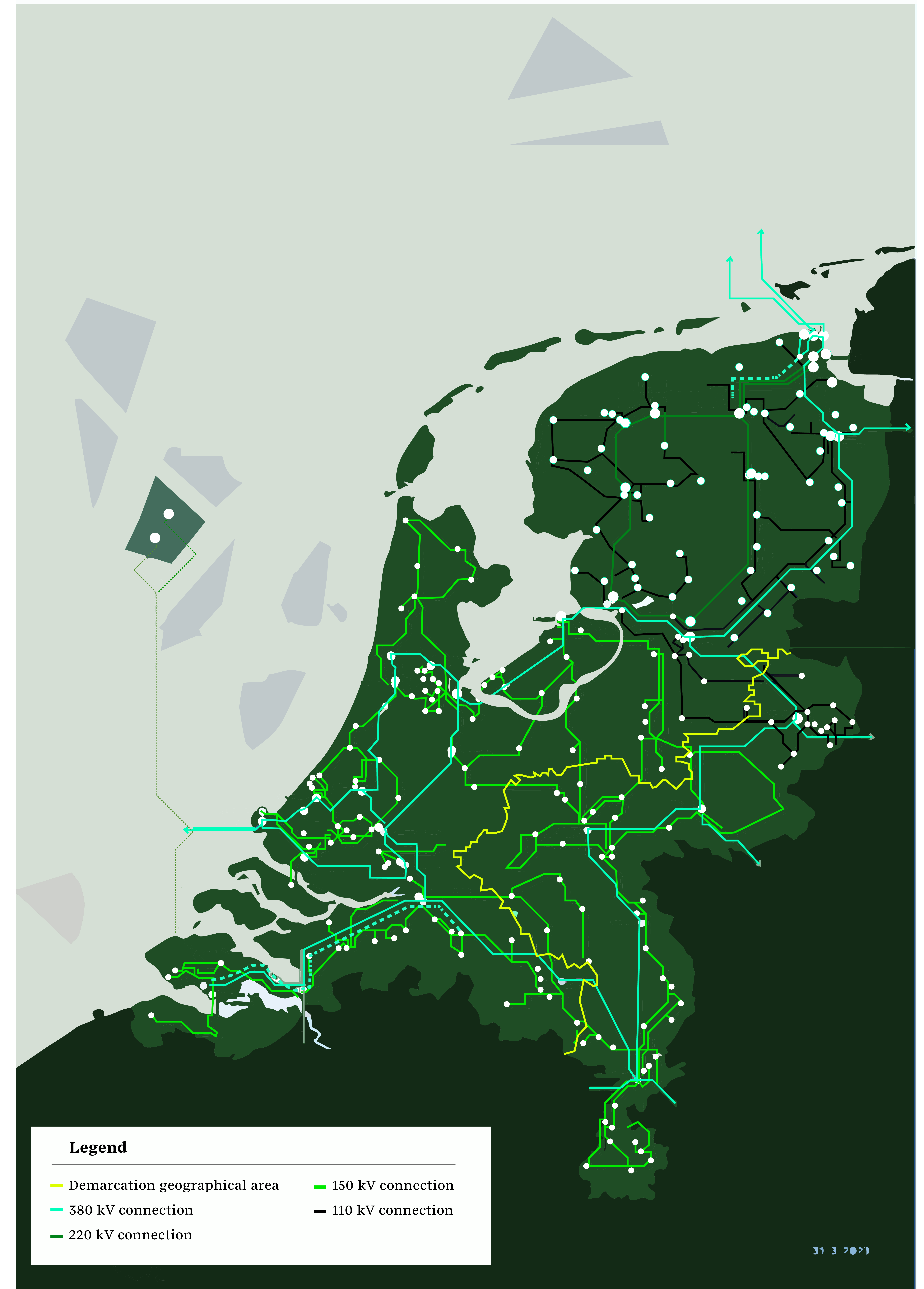
Figure 2: The area northwest of the yellow line is available for additional demand solutions. Source:Government Gazette of the Kingdom of the Netherlands
To tackle the current challenges advancing the energy transition (e.g., failing offshore wind tenders, grid access bottlenecks, and insufficient progress in electrification of the energy system), recognizing that we have entered a new phase of the energy transition is the first step. To unlock progress and effectively steer the system as a whole, all participants need to reconsider and recalibrate their roles and responsibilities.
This starts from a holistic vision of the “end” goal of the energy system. We need to acknowledge that efficiently operating a renewable energy system requires grid infrastructure designed for peak demand, a range of flexibility measures (including storage) to balance supply and demand, and effective use of energy conversion. Policy makers should provide clear long-term targets and give TSOs the instruments to ensure operability of the system as a whole. Development of generation capacity, demand, and required flexibility must be planned and coordinated both in time and space.
The newly formed, independent National Energy System Operator (NESO) in Great Britain aims to provide a more holistic approach to energy planning across electricity, gas, and other energy sources. NESO will play a key role in achieving Great Britain’s long-term energy system ambitions, principally to deliver clean, affordable, and reliable energy. A key part of this will be the development of a Strategic Spatial Energy Plan (SSEP), which considers not only the quantity and mix of energy generation and storage required, but also where this generation and storage should be located to deliver a cost-optimal system, accounting for demand and network capacity.
A key lever in delivering the SSEP will be NESO’s role in managing access to the system for generation and storage through the connections process, working alongside the relevant transmission owners (TO). This will be supported by reforms to the connections process, moving from a ‘first come, first served’ approach, which has led to an oversubscribed connection queue with inefficiently allocated capacity, to a ‘first ready, first connect’ system, which will prioritize projects based on their readiness to connect, as well as their strategic alignment with the government’s energy plans. The reforms are part of the government’s Clean Power 2030 Action Plan, which aims to deliver a substantially clean power system by 2030, with at least 95 percent of generation from clean sources.
Setting the auction rules for new renewable generation projects is one of the most important tools for governments to achieve an integrated approach to power demand, supply, and flexibility across time and space. Some elements to consider:
The energy transition is entering a critical phase, with grid integration being the main bottleneck. To facilitate offshore wind growth and rising electrification demand, a whole-system approach and a recalibration of roles between governments, TSOs, and industry are needed.
To address the challenges:
The successful and timely integration of the huge power generation capacity of offshore wind, solar, and other renewables will hinge on breaking silos between policymakers, TSOs, and industry and fostering collaboration. Only a truly holistic approach can create a resilient, integrated energy system capable of meeting net-zero ambitions.
[1] Under a CfD scheme, a fixed "Strike Price" is offered to generators over a typically 15 yearlong contract period. This provides financial certainty, unlike the wholesale electricity market which can fluctuate significantly. With the contract for difference, if the market price for electricity drops below the Strike Price, the government pays the generator the shortfall, however if the market price rises above the “Strike Pice”, the generator must pay back the difference. The costs, or benefits, of the scheme are passed onto consumers via their electricity bills.
Why TSOs must move beyond grid expansion and embrace flexibility, storage, and smarter system design to deliver a cost-effective net-zero power system.

ERM Partner Stephanie Gopaul shares insights into the challenges, opportunities, and local idiosyncrasies developers can expect in the exciting and fast-growing African market for renewable energy.