
Experts see clear opportunities to accelerate sustainability progress, with systemic interventions, stronger policy mechanisms, technology and collective action emerging as the most promising levers for impact.
The latest Sustainability at a Crossroads survey, as part of the Routes to Transformation program, captures the views of 610 sustainability experts across 57 countries on the future of the global sustainability agenda and the actions most likely to drive meaningful change over the coming decade.
The findings reveal a community increasingly focused on translating ambition into tangible outcomes. While respondents identify potential pathways forward, they also highlight persistent gaps between what could drive the greatest impact and what is realistically achievable amid ongoing political and economic disruption.
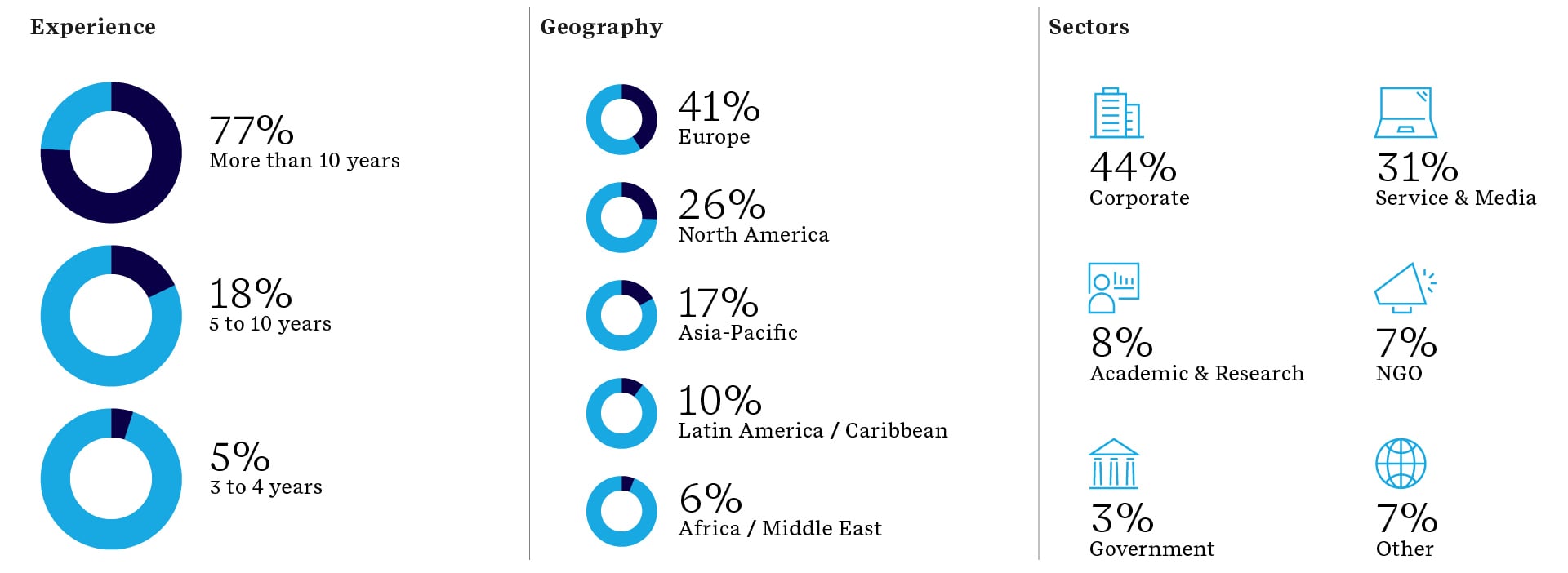
Download ReportRespondents represent a diverse group spanning multiple geographies, sectors, and levels of professional experience, providing a broad perspective on the issues explored in this report.
Key report findings include:
- Feasibility is improving, but an impact–delivery gap remains. Feasibility scores increased across every intervention area since 2025, yet impact ratings continue to exceed feasibility ratings, highlighting a persistent gap between what experts believe could work and what they believe can realistically be delivered.
- Systemic interventions offer the greatest potential. Experts favor interventions that can shift markets, industries, and economies, with policy incentives, technology innovation, supply-chain transformation, and financial-market reforms among those seen as having the greatest potential.
- The sustainability agenda still needs significant change. Nearly six in ten experts say the current approach should be radically revised, up from 56% in 2025, while 95% believe some level of change is needed.
- Sustainability backlash remains widespread. Seven in ten experts report significant sustainability or ESG backlash in their country, unchanged from 2025 but up from 57% in 2024.
- Political disruption is a major barrier to progress. Political polarization, policy uncertainty, authoritarianism, and geopolitical tensions are viewed as the most damaging external forces affecting sustainability outcomes.
- Technology is viewed as an enabler, not a standalone solution. Experts see technological innovation as one of the most impactful and feasible levers for change, but believe it must be supported by policy, institutions, and collective action to deliver meaningful outcomes.
- The business case remains strong, but confidence in outcomes is low. While 52% of experts believe the business case for sustainability is very strong, only 10% strongly believe the world will achieve net zero by 2050 and just 5% believe most companies will meet their 2030 climate commitments.
What does the survey tell us?
Why are experts calling for a new approach to sustainability?
Many respondents believe sustainability has become overly focused on disclosure, compliance, and incremental improvements, while progress toward meaningful outcomes has remained limited. They call for stronger accountability, better alignment of economic incentives, and greater emphasis on implementation and measurable impact.
How is the sustainability community evolving?
Experts increasingly believe the sustainability movement needs fresh perspectives. Many support greater generational renewal, stronger leadership from the Global South, and a broader focus that better balances environmental priorities with social and economic considerations.
What continues to drive progress despite growing disruption?
While experts identify significant political and economic challenges, they also point to areas of broad consensus. Access to renewable energy is viewed as the strongest enabler of sustainability progress across regions and sectors, while energy security, climate impacts, and water security are increasingly driving investment, innovation, and action.
Routes to Transformation Webinar
Join us on October 29 for a discussion of the survey findings, including the opportunities, barriers, and interventions that experts believe can accelerate sustainability progress.
Register hereJoin Chris Coulter (GlobeScan), John Elkington (Volans), Mark Lee (ERM), and an exceptional group of commentators from around the world.
The webinar will include a 60-minute presentation and discussion followed by a 30-minute consultation for participants to share their views on the thinking that is emerging from the Routes to Transformation program.
Can't join us live? Register anyway, and we'll send you a link to the recording after the event
Date: October 29, 2026
Survey results presentation and discussion: 10:00-11:00 AM New York / 2:00-3:00 PM London
Optional consultation: 11:00-11:30 AM New York / 3:00-3:30 PM London
Location: Online (Zoom link provided upon registration)