

The challenge: Mitigating the environmental impact of nickel extraction for a sustainable energy transition
Indonesia’s rapidly expanding nickel mining sector plays a critical role in the global energy transition, supplying key materials for battery value chains. However, mining activities in the Sulawesi region risk clearing local high-carbon-stock, high-conservation-value rainforest, with consequential impacts on carbon emissions, biodiversity, and local communities.
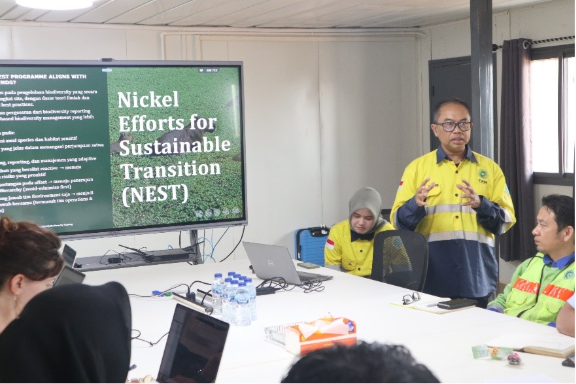
The Nickel Efforts for Sustainable Transition (NEST) program began in late 2024 as a multiyear, multi-stakeholder partnership to reduce environmental impacts associated with mining along the nickel supply chain in Sulawesi, Indonesia. Tesla and CNGR co-fund NEST, with four mine sites on the island currently participating.
In its first year (2024-2025), prior to ERM’s involvement, the NEST team identified high-conservation value locations in the battery value chain and scoped projects to address opportunities for project implementation. As the program transitioned into its second year, the key focus was to convert strategic insights into practical action—building mine‑level capability to manage environmental risks, apply the mitigation hierarchy, and deliver measurable conservation outcomes.
What ERM did: Building site-level capability to manage environmental impacts through targeted technical assistance
During NEST’s second year (2025-2026), Tesla and CNGR engaged ERM to support program implementation and secure additional stakeholder buy-in. In December 2025, ERM mobilized biodiversity subject matter experts in Indonesia to support the work, drawing on deep local contextual knowledge and regulatory understanding in environmental management and nickel mining.
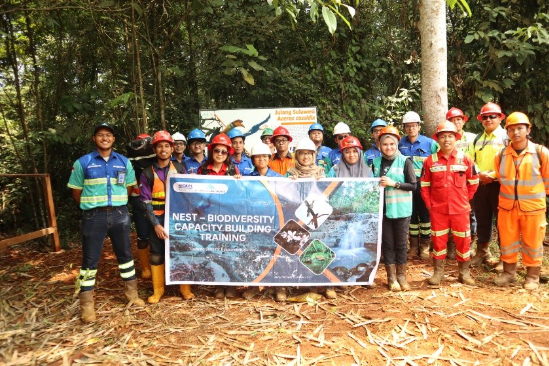
ERM subsequently designed and launched a capacity-building initiative on environmental management and conservation for three mining sites in Sulawesi. In February 2026, ERM’s Indonesia team trained 151 workers and contractors across these sites. As a next step, ERM is providing ongoing follow-up support, capacity building, and technical assistance.
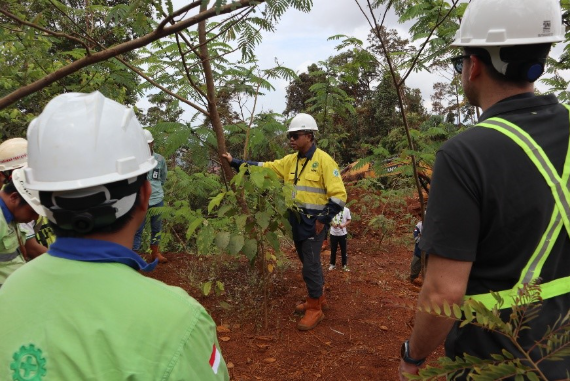
This support focuses on implementing priority species and habitat management activities, including identifying suitable areas for habitat conservation, improving soil conditions in former mining operation areas, and rehabilitating post mining activities through a restoration program. To support soil rehabilitation, the team worked with soil and land-reclamation experts from Bogor Agriculture University, who shared guidance on improving soil health in ex-mining areas. This included adopting integrated soil restoration approaches such as improving soil structure, porosity, and water infiltration; enhancing nutrient availability and retention; restoring microbial activity; and strengthening plant-soil interactions to support long term vegetation growth.
At two sites in particular, NEST’s mining land rehabilitation efforts have focused on improving soil fertility, guiding native forest restoration, building nursery capacity, and establishing practical monitoring of planting and biodiversity outcomes. ERM is working with these sites to strengthen their capability in soil improvement, nursery management, and rehabilitation across identified areas, covering over 20 hectares, with a target of approximately 650 seedlings per hectare. NEST is also collaborating with local universities on soil improvements and forest reclamation activities to inform post-mining rehabilitation approaches and improve on-the-ground outcomes.
In parallel, ERM is supporting conservation planning at one of the sites by helping to identify a protected set-aside area where no mining will occur and developing a management plan outlining required restoration, protection, and management actions. ERM is working with mining rehabilitation experts from Bogor Agriculture University to provide advice on nursery development, including standard procedures for plant propagation, maintenance, preparation of planting, and appropriate species selection and handling. ERM will continue to provide technical assistance to support implementation of the plan and monitor progress over time.
Finally, ERM engaged various stakeholders, including two additional mining companies and local universities, to identify future project activities. These activities will focus on conserving habitat for endemic species and rehabilitating mining land through improved soil and nursery practices.
The impact: Laying the foundations for long-term environmental management
Through the NEST program, participating mine sites strengthened their site-level capability to manage forest and biodiversity impacts while delivering tangible conservation outcomes across Sulawesi. The program supports conservation planning across 5,983 hectares, including commitments to dedicate areas for Anoa (dwarf buffalo) and Maleo bird conservation. Within these areas, the program designates specific zones for long term protection from mining and targets other areas for rehabilitation to restore ecosystem health and resilience.
The program also provided Tesla and its partners with a clear, evidence-based understanding of environmental impacts and solutions across Sulawesi, enabling more informed decision-making and targeted action. Beyond environmental benefits, NEST focuses on enhancing collaboration between industry, NGOs, local communities, and government, increasing resilience and credibility across the nickel supply chain.
During the last site visit in April 2026, the NEST team observed early progress following the capacity building activities delivered in February 2026. Mine sites began applying the training by developing standard operating procedures for nursery management and land reclamation/rehabilitation, preparing biodiversity management plans, and improving responses to biodiversity encounters during mining. While some improvements are still needed, the NEST team will continue to work closely with participating mining companies to support alignment with international standards.
Overall, the program demonstrates that responsible sourcing and environmental impact initiatives can be embedded into core business strategies. By doing so, participating companies position themselves as leaders in sustainable mining and support their long-term social license to operate.
Looking ahead, ERM will continue project implementation while engaging new stakeholders, identifying additional projects for the program’s third year. In parallel, the NEST team will explore the use of tools such as AI-enabled camera trapping and environmental DNA (eDNA) monitoring to strengthen biodiversity monitoring at mine sites. These tools will improve the accuracy, efficiency, and transparency of biodiversity data, support regulatory compliance and adaptive management, and deliver stronger conservation outcomes. The program remains open to additional downstream participants and local implementation partners.
Testimonials
Additional information
TetraTech HCV Report
Tesla 2024 Impact Report Disclosure
CNGR Annual ESG Disclosure
Hengjaya boosts biodiversity training at Sulawesi mining site - ANTARA News