Patient Care Pathway Assessments: A Holistic Approach to Reducing Healthcare Emissions
As healthcare systems worldwide confront rising demand, constrained resources, and mounting pressure to meet net-zero commitments, one truth is becoming clear


Content
A proactive approach helps pharmaceutical companies make the right decisions early, leading to successful major capital investments and resilient, future-ready facilities.
The pharmaceutical sector is in the middle of a global investment wave to expand manufacturing capacity. The challenge lies in execution: getting a production facility off the ground is a complex puzzle. The number one rule to avoid costly mistakes: the plant location will determine success so companies should do serious homework before they pick one.
Currently, 647 new pharmaceutical manufacturing projects, worth almost US$190 billion, are pending, according to the pharma plant project tracker of research company Blackridge. Large companies frequently cross the border to make these investments.
For example, European companies such as Roche, AstraZeneca, Novartis, and Sanofi, and Asian companies, such as Takeda, account for close to half of the US$370 billion that pharma companies have committed to invest in U.S. manufacturing capacity between 2025 and 2030. At the same time, U.S. pharma company Eli Lilly is making billion-dollar investments in the Netherlands, Germany, and Ireland.
Proactively weighing market proximity, regulation, infrastructure, environmental and climate risks, skilled workforce, and community – factors that together can make or break the feasibility of your project location – is hard even in the best of circumstances. In countries and regions companies are less familiar with it is even more daunting.
But no matter if a project is abroad or on home turf, the challenge is the same: making the right decisions before significant capital is committed. This starts with the realization that all factors – such as permitting, community engagement, and facility design – are interconnected, and each misstep can create ripple effects across cost, schedule, risk, and long-term performance.
This article explores the challenges in three main areas – site selection, permitting, and plant design and construction – and how anticipating them can help companies reduce uncertainty, strengthen resilience, and protect the long-term value of their investments.
The true test of a site is not how it performs today; it is whether it will still work in 20 years. Beyond land, labor, infrastructure, utilities, logistics, and market access, companies increasingly need to consider climate risk, water availability, energy resilience, resource efficiency, environmental constraints, and the potential for extreme weather and other hazards to affect facilities over decades. Balancing these factors helps companies assess both development feasibility and long-term operational resilience.
Sustainability and climate risk are becoming critical factors in determining whether a site can support a facility throughout its intended lifecycle. While some companies are beginning to assess future climate hotspots before making location decisions, immediate business priorities can still dominate.
However, climate risk can quickly become a design, operational, and capital cost issue and threaten long-term resilience. For example: rising temperatures can increase cooling demand, while flood exposure can influence drainage, placement of equipment, access routes, and emergency planning.
One of the pharmaceutical projects ERM supported encountered a common and crucial trade-off in site selection: the locations that are easiest to develop are not always the easiest to operate. For example, a rural site in the northern U.S, offered abundant land, lower development costs, and a relatively straightforward permitting path, but raised concerns about access to the specialized workforce needed once the facility entered operations.
A different location in the southern U.S. offered a more balanced proposition—a relatively rural setting for development, while remaining within reach of a growing technical talent pool. Another project accepted greater air permitting, water, and regulatory constraints, because the site’s location offered access to research institutions, universities, skilled talent, and nearby markets.
These trade-offs illustrate why site selection needs to take the entire operating environment into account. This can also involve infrastructure. For example, a pharmaceutical company expanding in Europe was close to finalizing a major land acquisition when it learned that the local energy infrastructure could not support future power needs. The company ultimately shifted the entire investment to another country: a costly lesson on the importance of infrastructure due diligence.
While sustainability and infrastructure readiness shape a facility’s long-term performance, permitting and community considerations can become immediate roadblocks. Navigating them is not easy in any part of the world and typically involves several regulatory agencies and levels of government. At the same time, the actual process, priorities, and sensitivities differ from country to country or geographical region.
For example, in Europe, air pollution limits are mainly based on levels that the best available technologies can achieve. In the U.S., air permitting decisions may consider local air quality conditions. Facilities in areas that comfortably meet federal air quality standards can, in some cases, obtain permits for additional emissions, provided they comply with Clean Air Act requirements and do not jeopardize attainment status.
Another important difference between the U.S. and Europe is that the planning process in the U.S. is fragmented and local governments in the U.S. have more autonomous power to review projects than in Europe. In many European countries, the planning process is collaborative, involving national, regional, and local authorities. This can be time consuming, but the outcome is broadly supported.
Since a relatively high number of European pharmaceutical companies are developing facilities in the U.S., learning how to navigate the U.S. regulatory and political landscape is crucial for them. Environmental, land use, public consultation, and environmental justice requirements vary across states and local jurisdictions, while federal, state, and local regulations and permits overlap. Overlooking these requirements or dependencies can lead to delays, redesigns, and unexpected costs.
Local environmental and community context further complicates the picture. A company’s approach to issues such as water stewardship, wastewater management, air emission control, and the protection of wetlands and forests, all influence permitting requirements and facility design. It is crucial to assess these constraints early, so project teams can integrate them into site layout, engineering decisions, and permitting strategies.
Companies should make engagement with community concerns about traffic, noise, land-use changes, and impact on local ecosystems a top priority. In some cases, public input can influence rezoning and land-use decisions.
Treating community engagement as a communications exercise is a mistake. Instead, companies should see involving communities early as an asset. It helps project teams understand local concerns and address environmental sensitivities before key decisions are finalized. An active strategy to minimize impacts on the local habitat, resources and communities can strengthen stakeholder trust while supporting regulatory compliance.
A project in the U.S. that ERM recently supported is a good example of the power of this approach. In the planning phase, the project team incorporated measures to minimize impacts on local ecosystems. By going beyond what regulation required, the team demonstrated environmental stewardship, building community support and accelerating the permitting process.
Once the site is selected and all permits and community approval have been secured, the focus will shift to designing a facility that is safe, reliable to operate, sustainable and built to last.
Sustainability and resilience to future physical risks must be embedded at the plant design stage rather than addressed reactively. Historical climate baselines may no longer provide a reliable foundation for assessing future physical risk exposure. Translating forward-looking climate projections into engineering specifications and infrastructure design parameters is critical to ensuring long-term operational continuity.
Cooling infrastructure highlights the importance of forward-looking design. As temperatures rise, organizations must assess the cooling capacity required to remain resilient under future climate scenarios. Similar considerations apply to energy and industrial heat systems, where early adaptation can reduce technical challenges and avoid higher capital investment requirements later.
Weighing these questions in the design phase saves money and ensures operational continuity. ERM has worked with several pharmaceutical companies to upgrade their cooling, heat, or energy systems; upgrading such systems while maintaining the stringent production quality, safety and reliability control that is required, is a recurring challenge. In many cases, retrofitting to adapt to climate risks is more complex and costly than integrating it into the design from the start.
The next phase is construction. In this phase, robust governance is crucial to ensure safety, cost control, schedule adherence, and quality: the four interdependent dimensions of project delivery. Pressures in one area can quickly cascade into others, amplifying project risks.
To avoid this, a governance framework must be established before construction begins, assigning explicit roles, decision-making authority, and accountability mechanisms for the owners, lead contractors, sub-contractors, and governance teams. Translating expectations into enforceable contractual requirements ensures consistent standards across the contractor ecosystem, while clear performance assurance mechanisms make sure risks are identified and corrected early.
Since stringent Environmental, Health & Safety (EHS) requirements and quality standards for pharmaceutical facilities leave little margin for error, disciplined governance and safety oversight are critical for smooth execution, protecting workers and delivering projects on time and on budget, without compromising quality.
Setting up a new pharmaceutical facility is a thorny process that’s not for the faint of heart. However, with the right mindset, a comprehensive approach, and ample preparation, companies can avoid most pitfalls. Below are some answers to questions clients frequently ask.
We are at the very beginning of looking for suitable locations for a new pharma facility. What are the first steps we should take to get to an initial list of candidates?
We are planning to set up a new facility in a country where we have not been active before. How can we successfully navigate local regulations and community concerns?
We are considering a location for our new plant, but we worry that an increase in extreme weather may disrupt production in the future. How can we prepare?
Global pharmaceutical manufacturing capacity is expanding rapidly, increasing pressure to bring new facilities online faster. But speed without foresight can lock in constraints, costs, and vulnerabilities for decades.
The projects best positioned for long-term success are those that do the hard thinking before capital and design decisions become difficult to reverse. They look beyond today to see if a site can meet tomorrow’s workforce, infrastructure, and operational needs. They anticipate and act on regulatory, environmental and community expectations early by advancing permitting strategies alongside design, initiating utility-capacity discussions, starting baseline environmental studies, engaging regulators and communities before formal applications, and identifying long-lead infrastructure or equipment. They design for resilience, safety, and adaptability from the outset.
Ultimately, future-proofing a pharmaceutical investment is about preserving options for as long as possible while creating certainty where it matters most. That means treating site selection, permitting, design, and delivery as interconnected investment decisions, not separate.
Content

As healthcare systems worldwide confront rising demand, constrained resources, and mounting pressure to meet net-zero commitments, one truth is becoming clear

Clinical trials, or the study of new tests and treatments for human health outcomes are essential for advancing patient care.
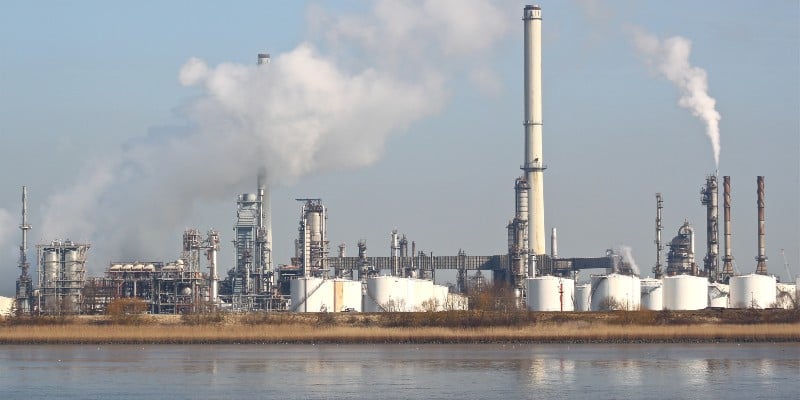
Due to high API concentrations, direct releases can have significant local impacts on water quality and health if these discharges are not adequately treated.