
Chapter Two: Overcrowding on Aisle Green: The Trust Problem
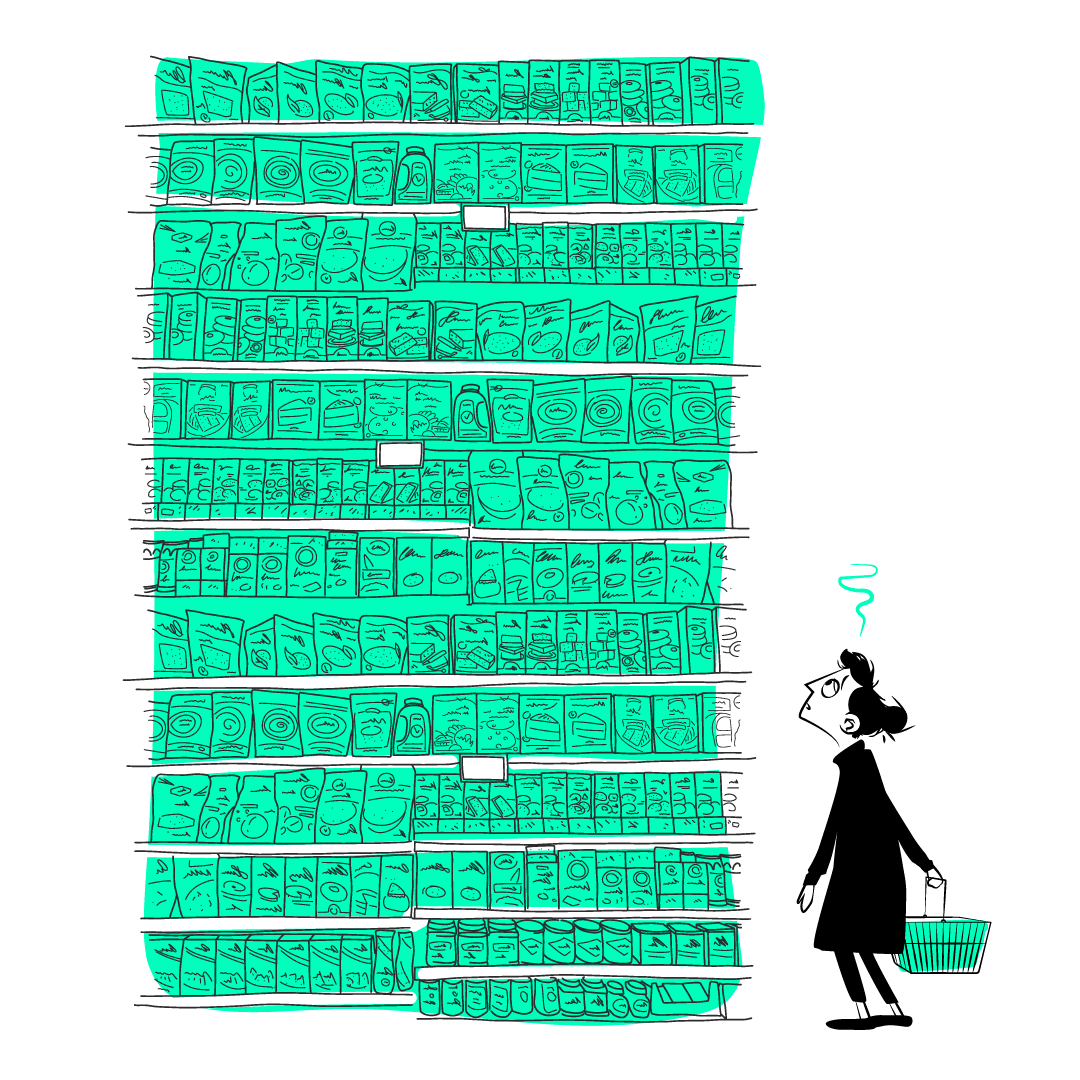
You pick up a carton. “Planet-friendly.” You grab a plastic jug. “Recyclable.” You look back at the shelf. “Sustainably sourced.” “Organic.” “Happy cows.” Are all the other cows UNhappy? Is the happy cows’ milk NOT sustainably sourced? Can I recycle cartons? Plastic is bad, right? But it’s recyclable...
Buying milk — and most products these days — has just become an exercise in value prioritization — a pretty heavy task while laundry is waiting, it’s rush hour, work isn’t quite over, and your family is hungry. You just wanted some milk, but now you have to decode the whole cooler.
What does any of this mean? Is this just marketing … or are these words and phrases actually different from each other? Who checks this stuff, anyway? The longer you stand there, the harder it becomes to believe in any of it. All those labels merge into a buffet of confusion, and there’s no telling what is real.
Marketplace friction just became trust erosion.
You just wanted to buy some milk.
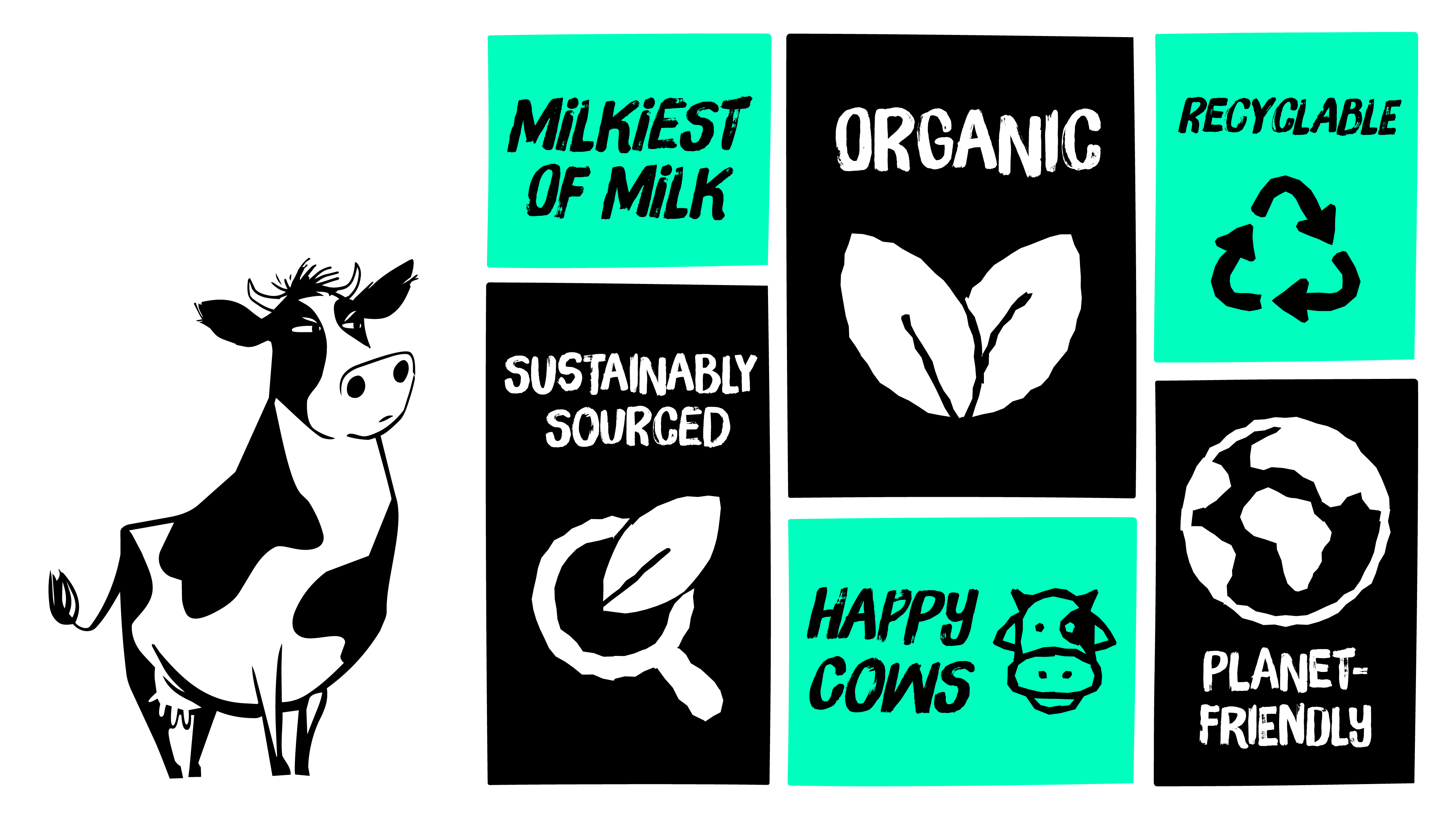
Overcrowding on aisle green
Let’s take a look back. The sustainability movement didn’t quietly grow into the marketplace. It exploded. As consumer interest surged, companies rushed to show they cared. Fonts went green. Packaging went unbleached. And suddenly every product had a sustainability claim.
That less-than-strategic leap into sustainability meant brands were trying to leverage sustainability without a shared language for a less-than-savvy (at the time) public. Valid claims versus greenwashing never got an official translation. Consumers were left to figure out on their own what all these signals meant.
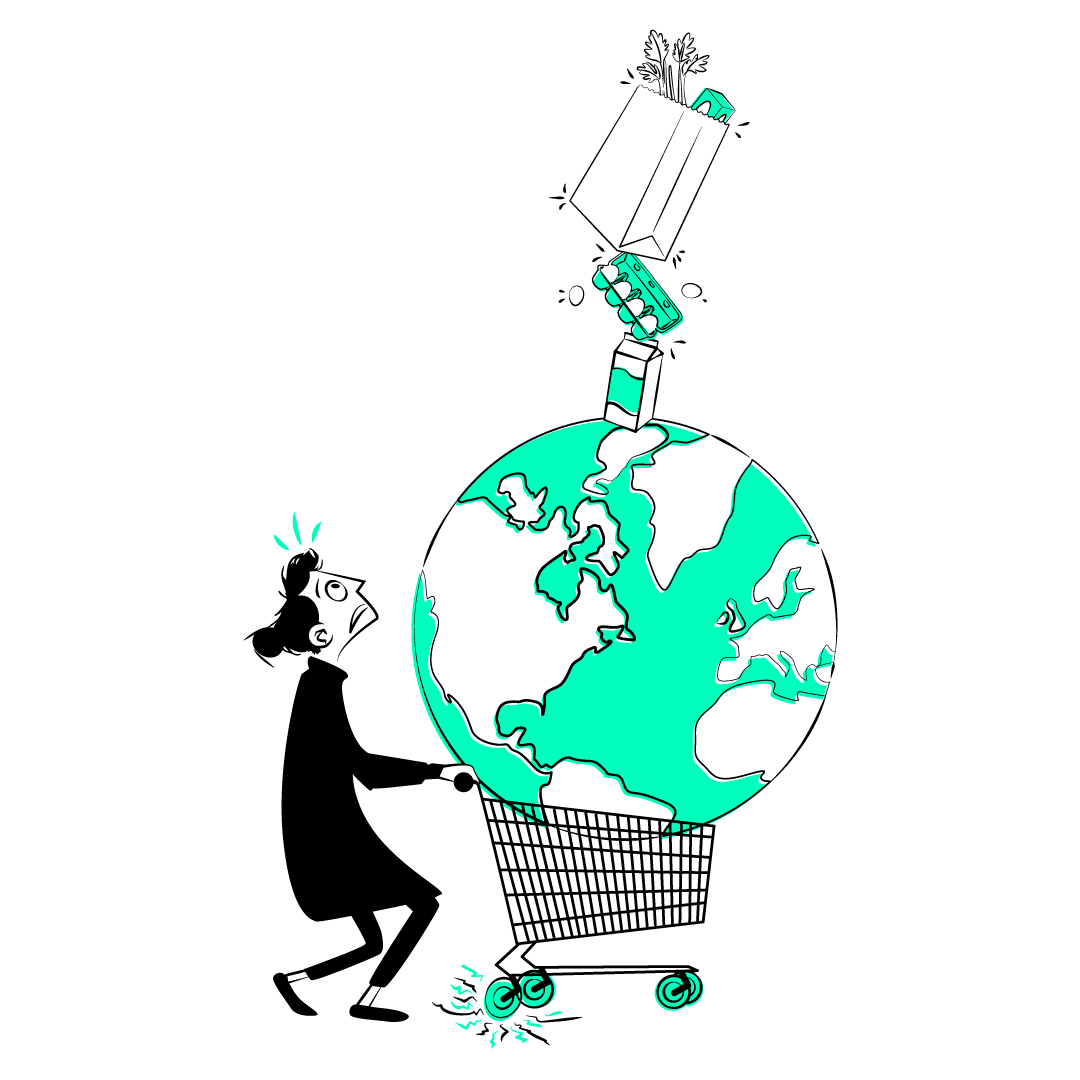
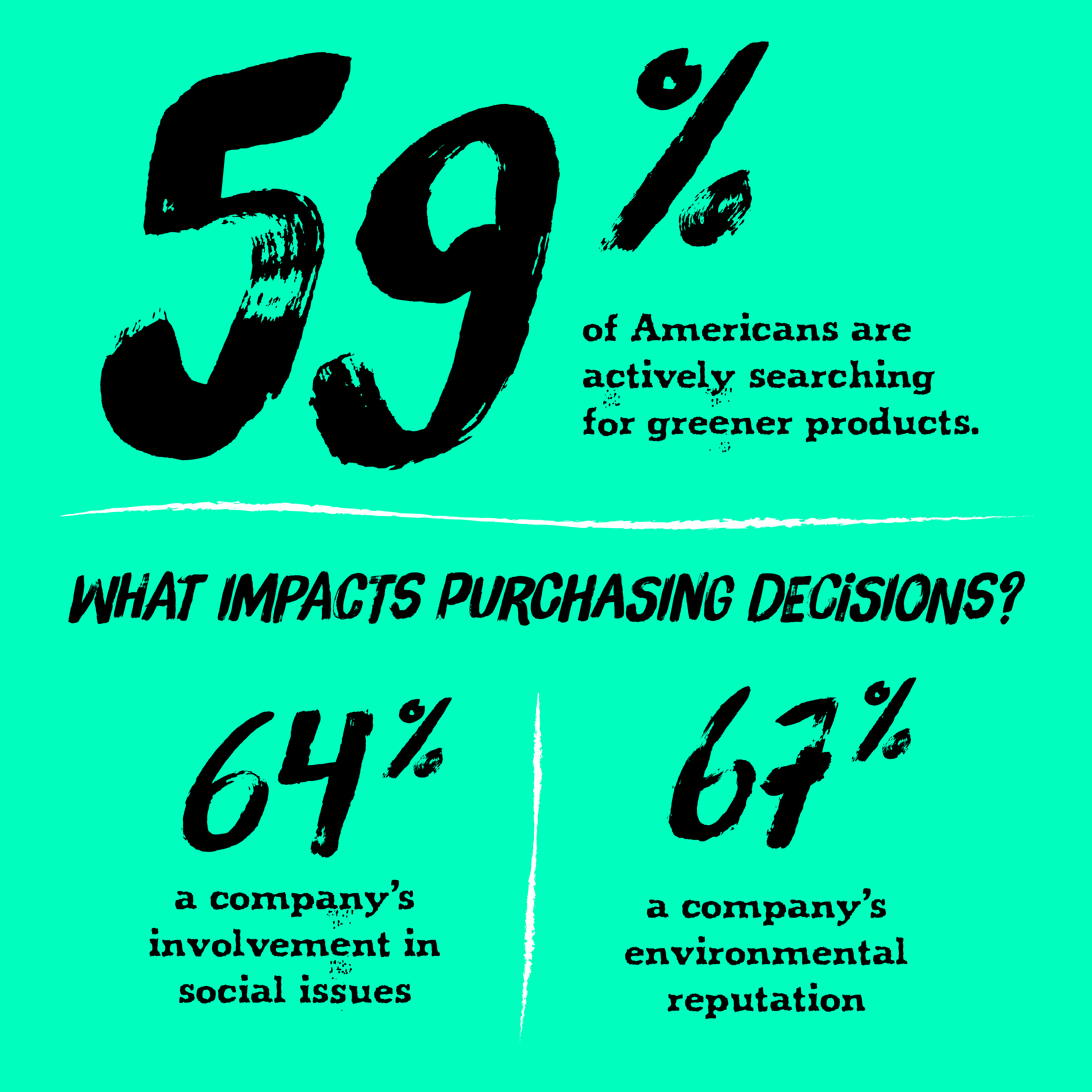
For a while, consumers accepted the claims and color indicators. Then the marketplace became overcrowded with sustainability signals. Consumers began to feel like they had to choose between different values, and unraveling the true impact of every product became complicated.
And today, that’s manifested as a lack of trust.
The cart is full, but the claims are empty
Today, our research shows that 64% of Americans have little to no trust in companies. And when it comes to environmental action, skepticism runs even deeper. As we learned in Chapter 1, out of 100 shoppers, 84 don’t believe that companies are voluntarily doing good; they believe companies wouldn’t protect the environment unless they were forced to by law.
But what’s even more shocking? Companies believe they are doing just fine.
According to a 2024 PwC survey, 90% of business executives believe customers highly trust their companies. That’s a big trust gap. And a huge collective oversight by company leadership.
And Americans aren’t just skeptical of businesses:
Trust in sustainability certifications has dropped to 33%, down from 43% in 2020. Confidence in recycling has declined significantly, too. The share of Americans who say they don’t believe items in the recycling bin are really recycled has grown from 14% in 2019 to 32% in 2025.
Consumer skepticism is high.
Does this come with simplicity?
But some things are working in sustainability. Consumers are selecting different sources of truth — sources that are easier to understand. Amazon’s Climate Pledge Friendly program illustrates this perfectly. It’s a single stamp of approval. Consumers don’t have to try to compare multiple sustainability claims, just the product with the Climate Pledge, and the product without.
The impact is real: In 2024, 38.8 million customers switched to Climate Pledge Friendly brands after previously purchasing other products in the same category.
The choice has been simplified, the anxiety has been quelled, and the friction has fizzled.
That shows that sustainability can be a trust builder and value creator for your company, brands, and products. But you have to use it right.
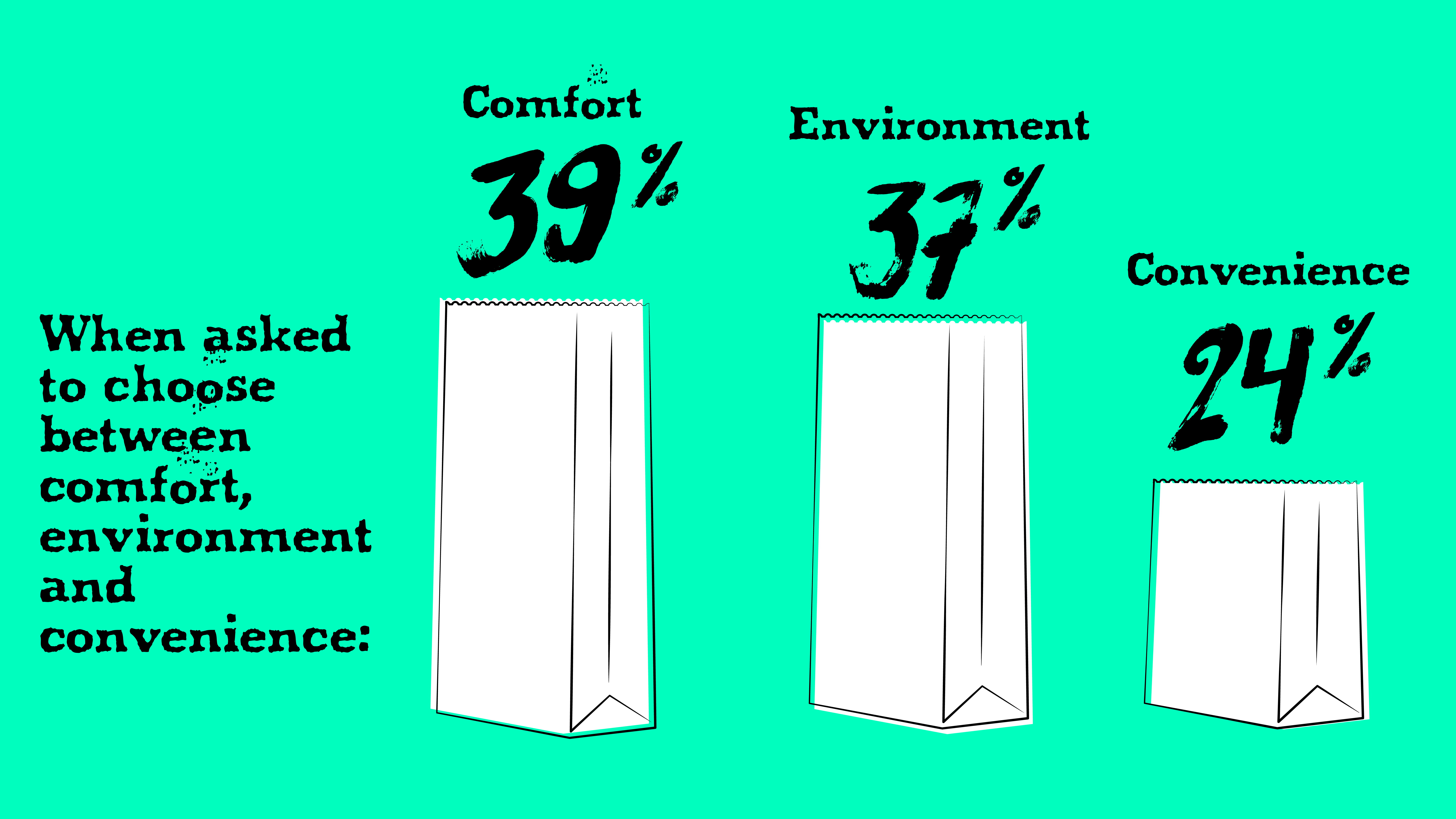
The writing on the packaging
According to McKinsey and NeilsonIQ, consumers reward brands that make credible sustainability claims, with 28% cumulative growth over the past five-year period. And a Deloitte multi-year study shows consumers expect responsible behavior, and relate it to trust.
So, here’s what goes wrong with sustainability messaging that can actually erode consumer trust, instead of building it:
- Vague claims: Unmeasurable or unprovable claims cause confusion. “eco-friendly,” “green,” “nature-positive”
- Seemingly irrelevant claims: (Milk carton: “This milk was produced with solar power.” Consumer: “Ummm, no … that was definitely made by a cow.”)
- Lonely claims: Claims without access to more information feel suspicious. (I’m carbon neutral. Truuust me … just don’t ask me how.”)
Want to do better? Good, because consumers want you to, too.
Building trust through sustainability isn’t complicated. It just takes a commitment to proof and cohesive messaging. The next time you’re working out sustainability messaging, follow these tenets:
It's credibility reset time: Verify those claims
- Yes, certifications can help (Americans aren’t abandoning them altogether).
- What helps more is a one-click method. Tell the story of your claim, and make it accessible from wherever that claim appears, whether on a product, webpage, label, or digital ad. Have a cohesive story ready for interested consumers.
What's matters, matters: Make it relevant
- Get specific. Don’t cover everything (even if you’re doing a lot of amazing things).
- What you highlight should be relevant to the company/brand/product it is associated with. (Touting an egg company’s animal welfare actions feels right; highlighting that same company’s electric vehicle fleet may seem disconnected.)
Don't just say it, be it: Make sustainability part of your brand story
- Trust is built through repetition and consistency: Don't just say a thing once, in one place. Your claims should be part of your brand story, but also live out in the wild, on websites, ads, social media, and beyond, so consumers can see them regularly.
- Research on trust recovery indicates that companies rebuild credibility when they focus on what they already do well — then repeatedly demonstrate it. That means talking about it. A lot. Everywhere. And before the point of sale. Maybe especially before the point of sale.
The brands that rebuild trust through sustainability won’t be the ones making the most claims. They’ll be the ones showing their work, with proof-backed storytelling, that reaches their consumers again and again and again. They’ll be the ones getting in front of their consumers before they go shopping.
Trust doesn’t come from saying everything. It comes from standing for something and proving it. And that something should be the things that matter to your consumers.
Stick around! Because that’s what we talk about next.