
Wilsonart had a compelling sustainability story grounded in both its people and its products. Yet as the market conversation accelerated, competitors were moving faster to claim environmental leadership. The company needed a clear, confident narrative and the strategic momentum to assert its position credibly — without risking greenwashing concerns.
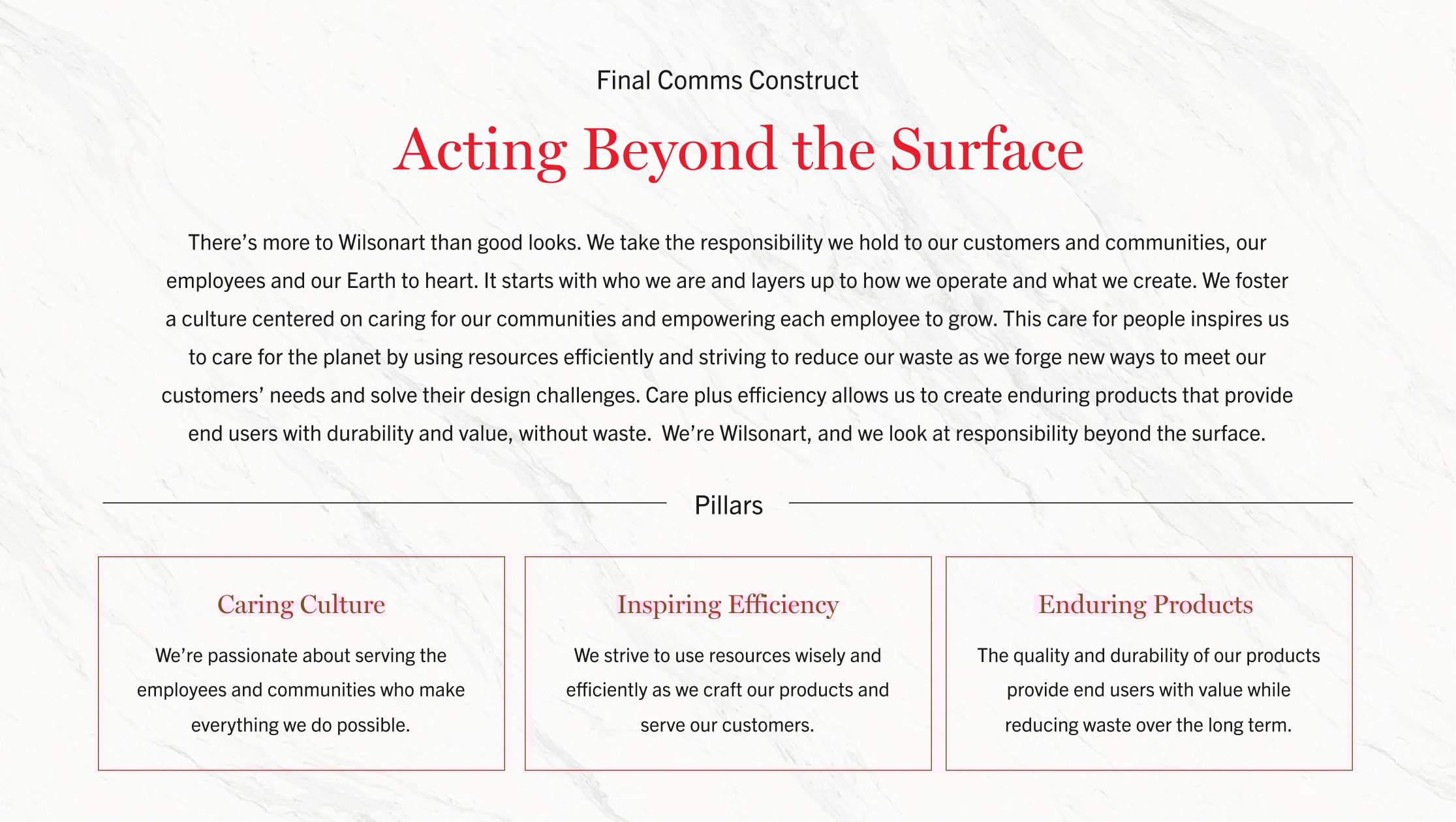
Data is necessary. But a great story is everything.
Wilsonart had all the building blocks. Great technical data? Check. Real-world examples (not just aspirations)? Check. But as we dug in with customers, specifiers and members of the sales team, what became clear is that Wilsonart needed an umbrella story to translate those technical ESG achievements into clear, compelling messaging that supports sales and strengthens client trust.
We learned a long time ago that if you talk to the people who you need to reach with a message, they will tell you what they want to hear.
So we started with in-depth interviews with next-gen architects and designers to validate perceptions and inform message development. That, along with a detailed competitor analysis, allowed us to identify the white space and market position Wilsonart could own.
Armed with that direction, we worked with Wilsonart to flesh out the proof points, the corporate sustainability story platform and one for their HPL product line, and an audience-specific messaging matrix to help marketing and sales teams tailor the story to designers, consumers and fabricators. The result: Acting Beyond the Surface.
Bringing it to life
The Wilsonart sales team needed a simple, credible way to connect ESG to customer values and questions. So we built a PowerPoint deck (with clear speaker notes), a brochure-style leave-behind, and scripted a video — all tools designed to help the sales team feel comfortable not just telling the story, but actually leveraging it to tip the scales in their favor.
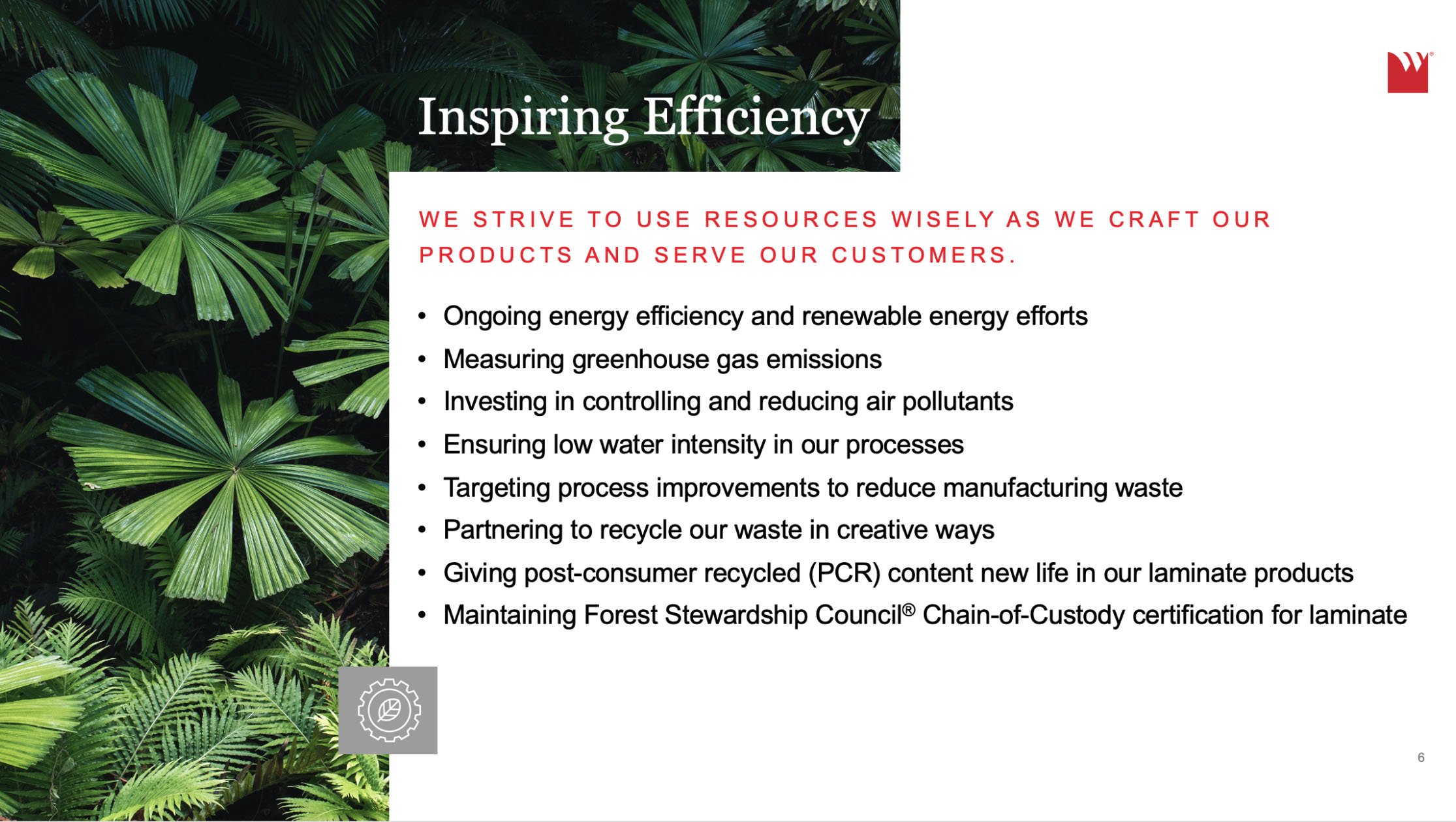
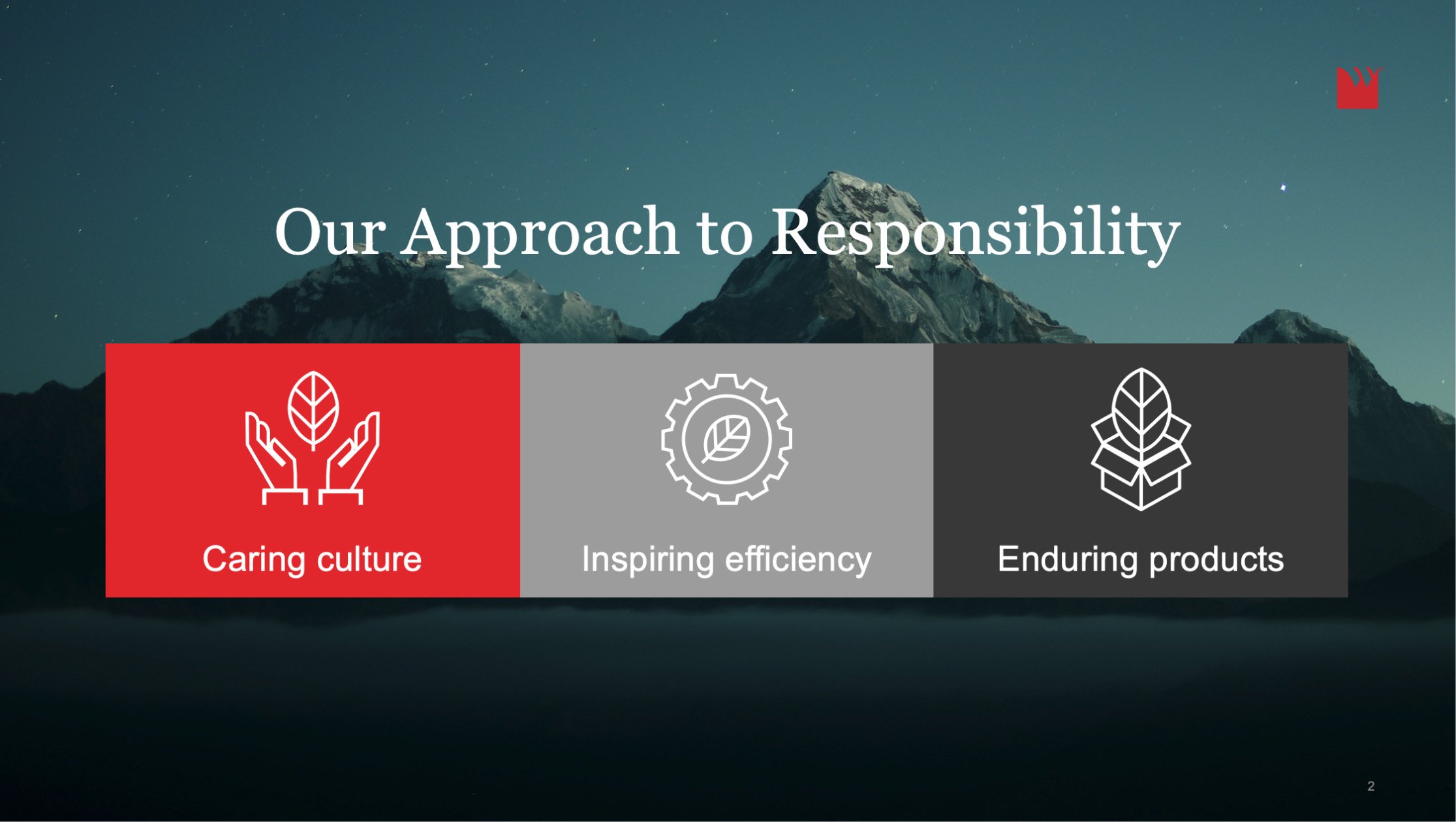

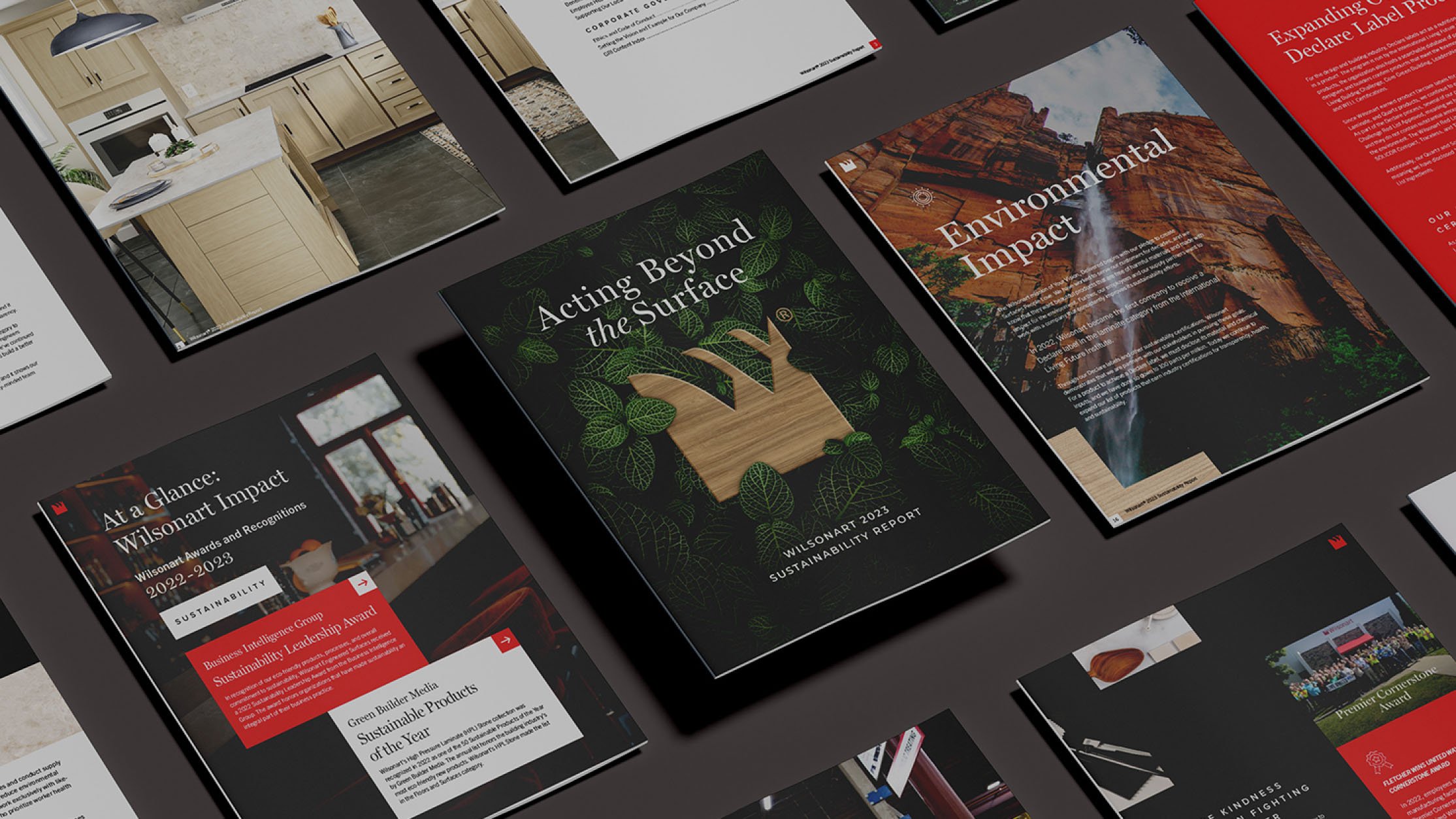
Paid ad campaign concept and report feature.
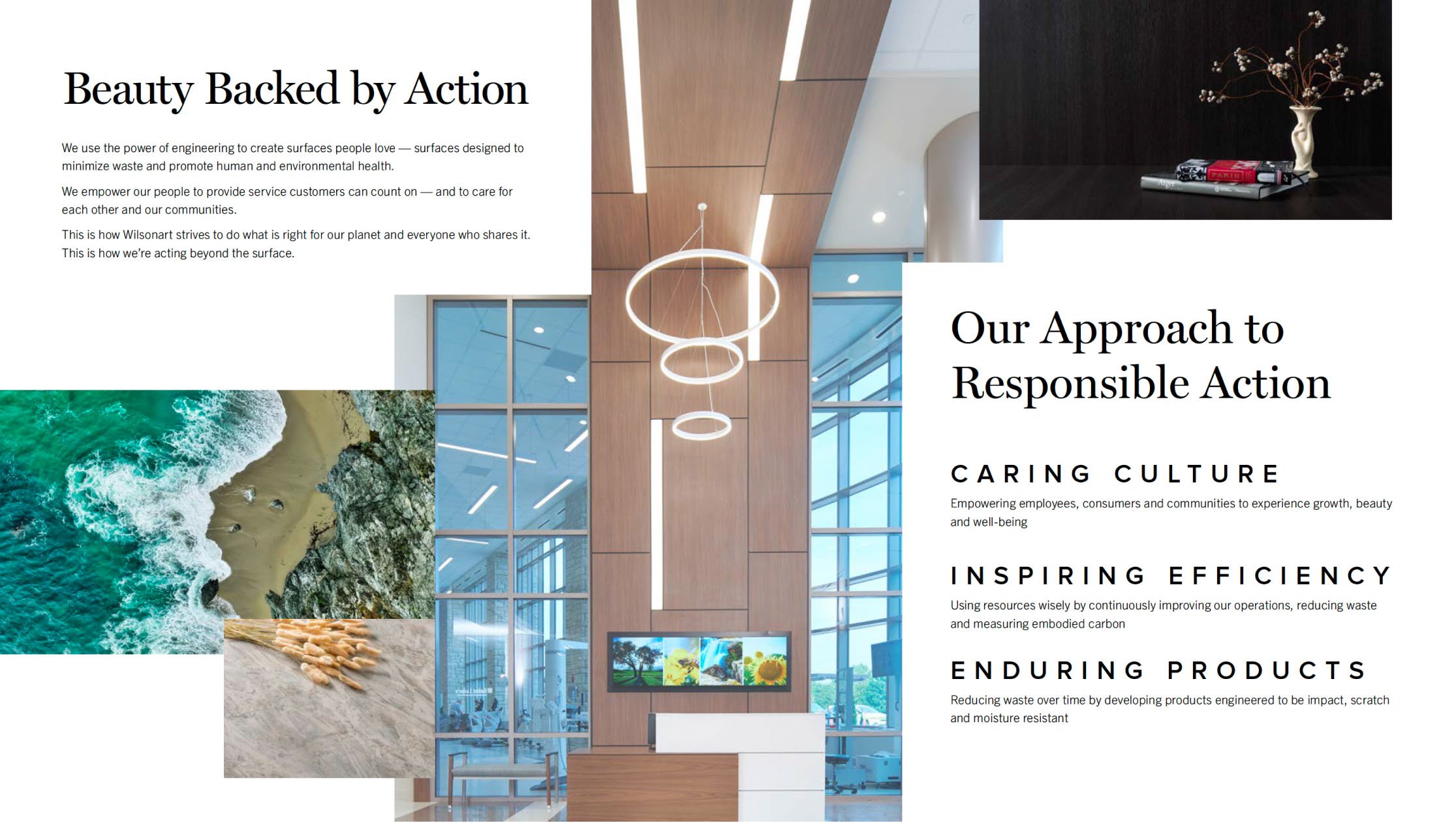
Elevating Wilsonart’s brand perception
But the story needed to work beyond selling situations. We have long known that ESG reporting isn’t just a disclosure tool — it’s a positioning tool. Especially for a company like Wilsonart with a compelling but previously under-communicated ESG story. We knew the right reporting approach could elevate Wilsonart’s brand perception with both institutional stakeholders and commercial buyers.
So we began a multi-year reporting journey with Wilsonart, delivering:
- 2021 Report: Wilsonart’s first ESG report — structured after leading benchmarks, designed to identify gaps and set a foundation.
- 2022 Report: Introduced the GRI 101 framework, incorporated UN SDG tie-ins, and added more detailed data and narratives.
- 2024 Report: Transitioned to biannual reporting, expanding content to cover global operations, incorporating insights from subject matter expert interviews, and delivering a robust report with GRI-compliant data tables.
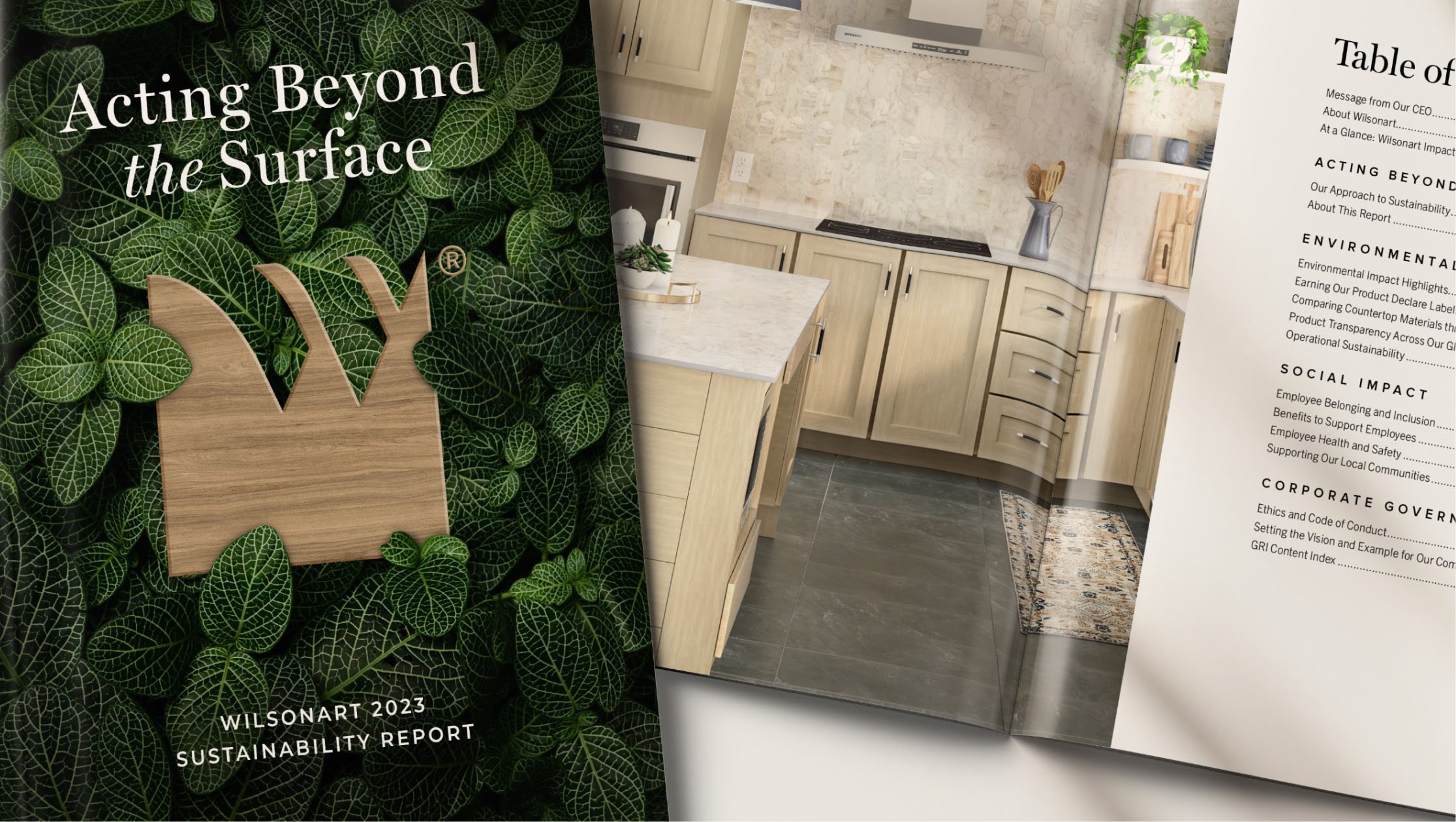
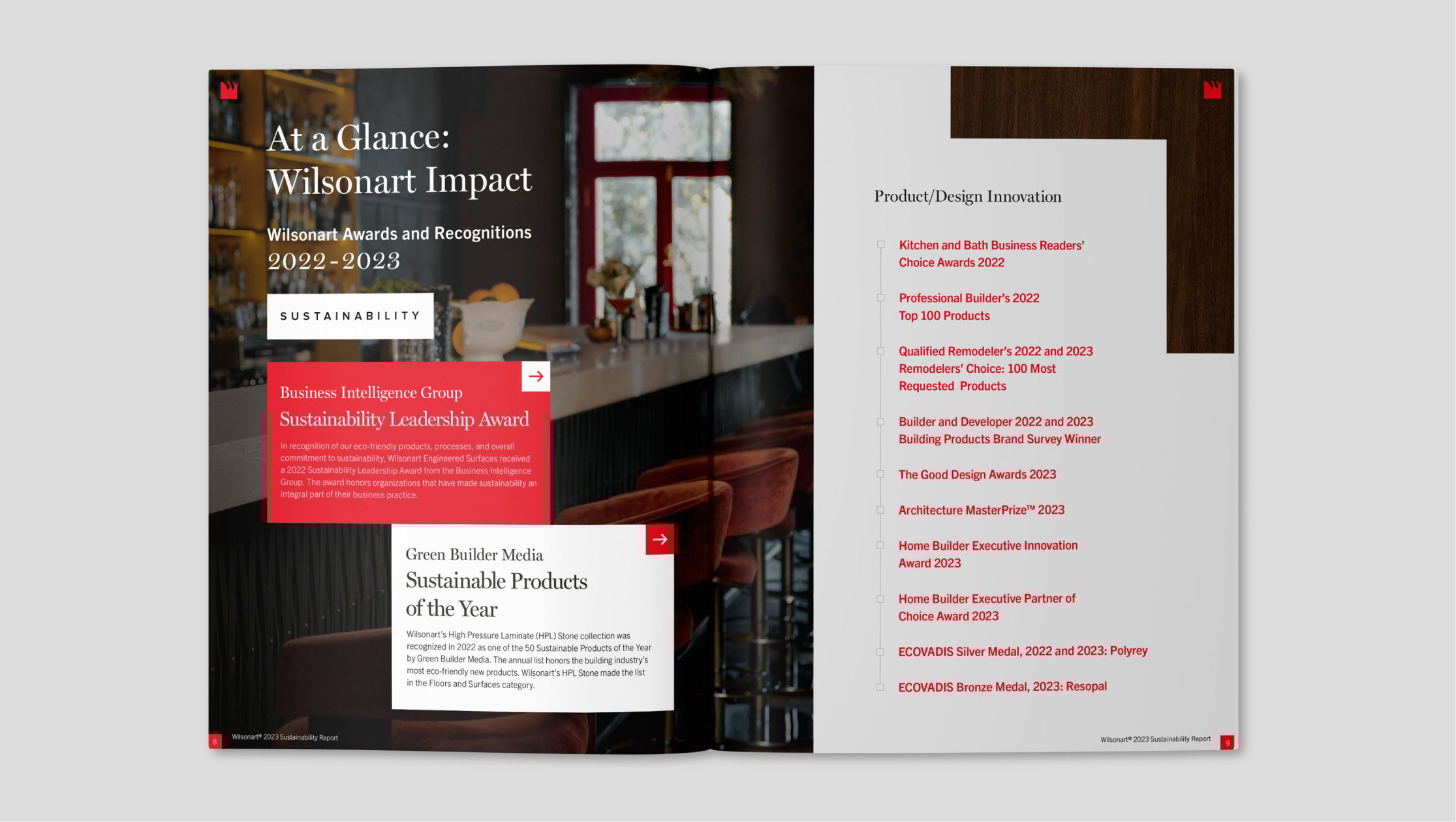
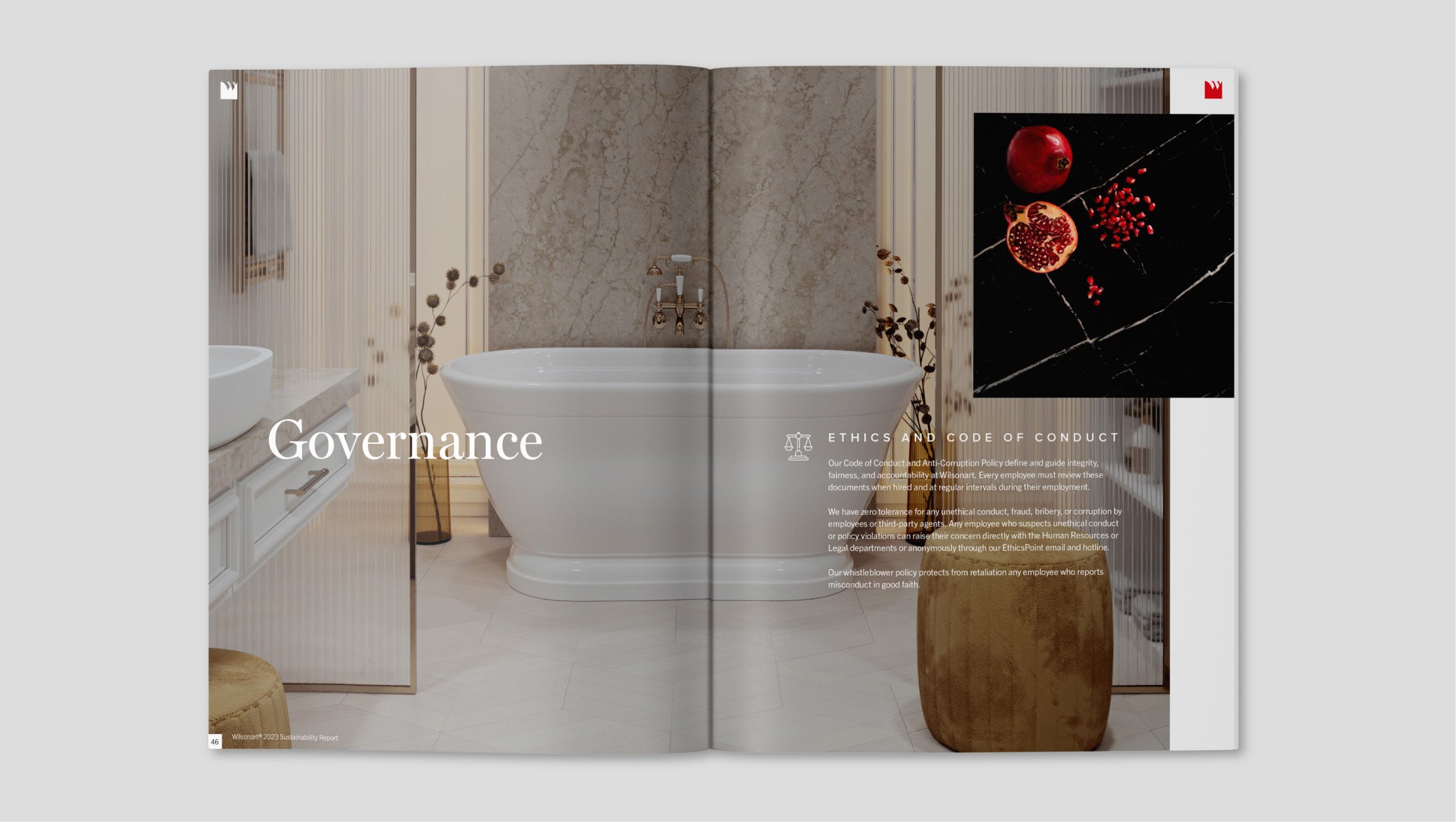
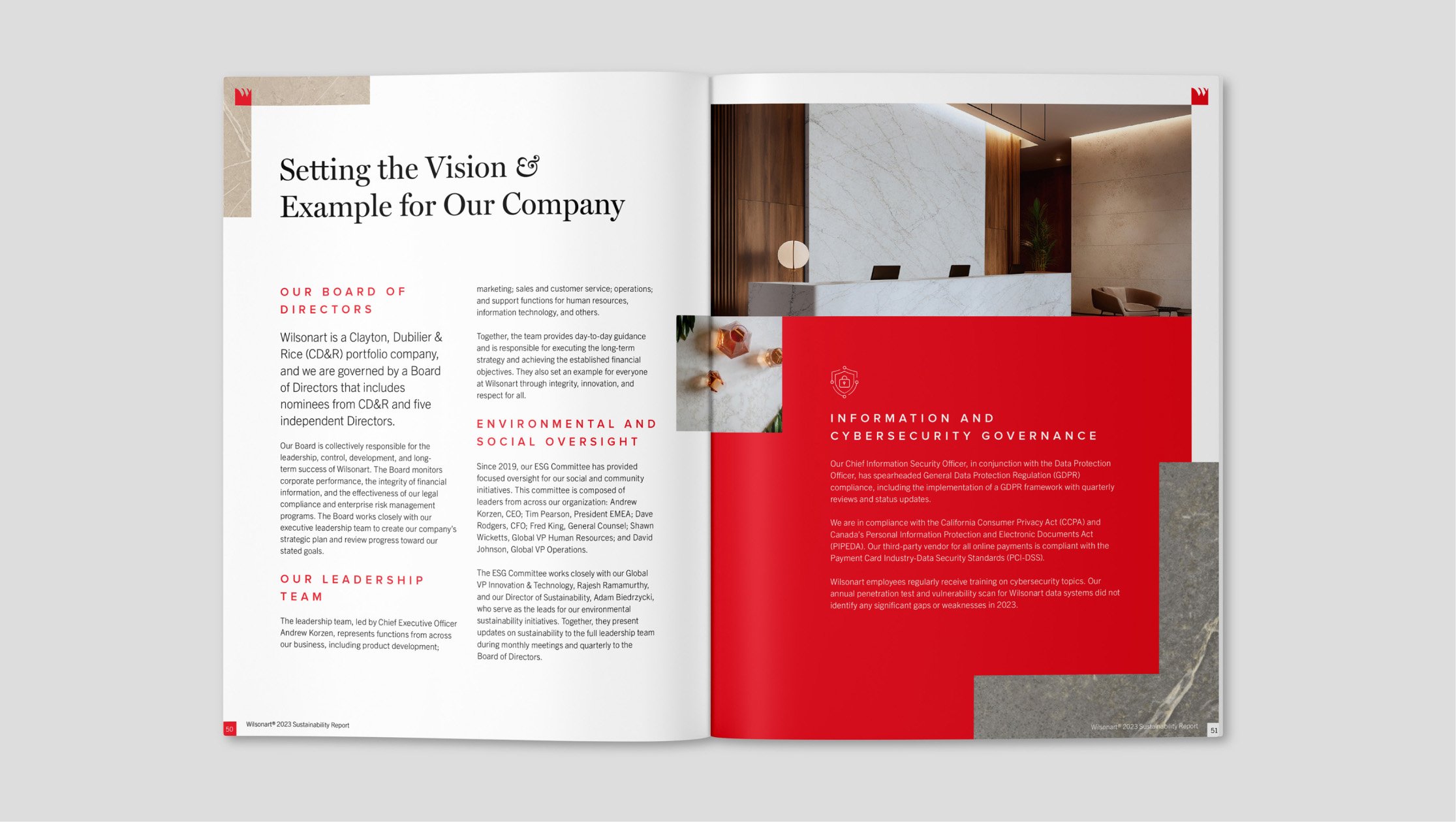
Sustainability storytelling alignment. Brand enhancement.
Our work has helped Wilsonart reframe ESG as a differentiator, not a compliance obligation. Wilsonart now has a scalable ESG reporting platform that supports investor and customer expectations, while building internal alignment around key sustainability metrics and stories. Each report we’ve created for them was built on the last, increasing Wilsonart’s ESG maturity, improving transparency, and earning the trust of stakeholders. The most recent report serves as a comprehensive resource for global operations and disclosure, helping Wilsonart keep pace with the growing expectations of the market.
This is all a great example of how the right strategy and structure can grow alongside a company’s ESG maturity and about shifting from reporting as an obligation to reporting as a brand-strengthening opportunity.